1

Nachrichtenzentrum

Heim

Nachrichtenzentrum

  • Spannende Neuigkeiten! Xiamen C&D Emerging Energy glänzt auf der Intersolar Europe und entwirft einen Fahrplan für eine klimaneutrale Zukunft.
    June 21, 2024

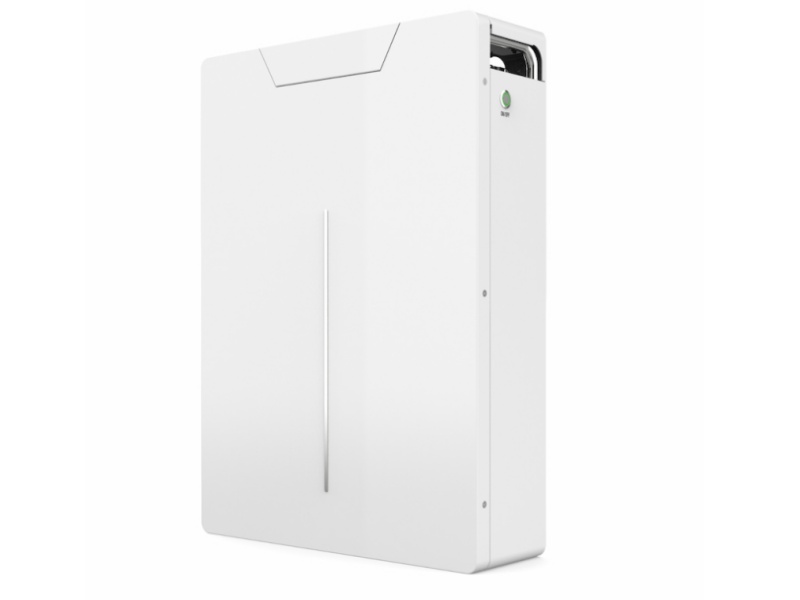
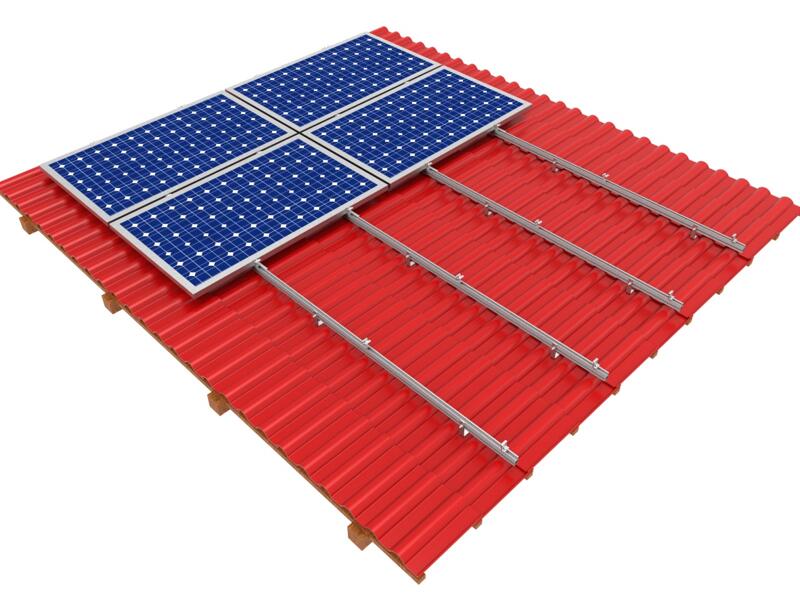
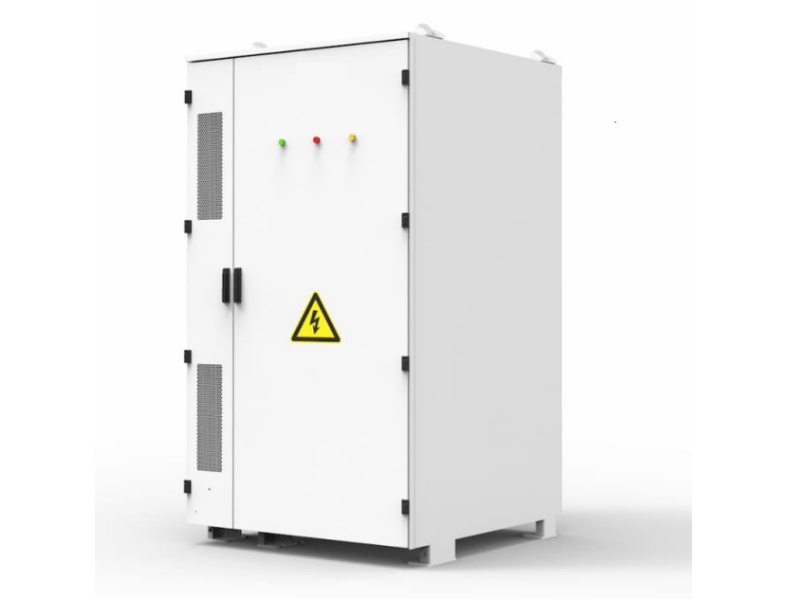
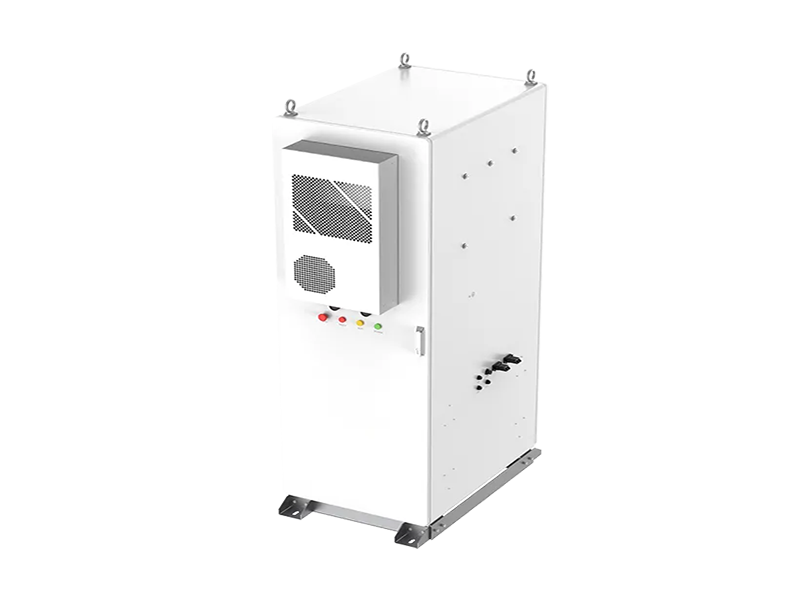
    Auf der weltweit renommierten Solarmesse Intersolar Europe 2024, die vom 19. bis 21. Juni in München stattfand, präsentierte Xiamen C&D Emerging Energy seine herausragenden Innovationen und seine umfassende Branchenerfahrung. Als hundertprozentige Tochtergesellschaft der Xiamen C&D Corporation Limited trägt Xiamen C&D Emerging Energy aktiv zur nationalen Strategie „Going Global“ bei und arbeitet mit Partnern zusammen, um die Zukunft der grünen Energie zu gestalten.Die Intersolar Europe, die weltweit führende Fachmesse der Solarbranche, bringt über 1.370 Aussteller aus aller Welt zusammen, um die neuesten Entwicklungen in der Photovoltaik-Technologie, Energiespeichersystemen und Energiemanagement-Anwendungen zu diskutieren. Xiamen C&D Emerging Energy nutzte diese Gelegenheit und präsentierte seine Solare PhotovoltaiksystemeXiamen C&D Emerging Energy bietet Energiespeicherlösungen sowie hochintegrierte Solarspeicher- und Ladelösungen für diverse Anwendungsbereiche. Von Photovoltaikanlagen für Privathaushalte über wasserdichte Carports für Industrie und Gewerbe bis hin zu zentralen Energiespeicherstationen – Xiamen C&D Emerging Energy hat seine herausragende Kompetenz in der Integration von Ressourcen entlang der gesamten Wertschöpfungskette von Photovoltaik und Lithiumbatterien unter Beweis gestellt und bietet globalen Industriepartnern effiziente und zuverlässige Produkte und Lösungen.  Am 10. März 2023 veröffentlichte das Bundesministerium für Wirtschaft und Klimaschutz (BMWK) die Photovoltaik-Strategie 2023. Diese basiert auf elf Handlungsfeldern und hat zum Ziel, den Ausbau der Photovoltaik zu beschleunigen und sicherzustellen, dass die installierte Photovoltaikleistung bis 2030 gemäß Erneuerbare-Energien-Gesetz (EEG) 215 GW erreicht. Die Strategie sieht vor, die jährlich neu installierte Leistung von 7,3 GW im Jahr 2022 auf 9 GW im Jahr 2023, 13 GW im Jahr 2024 und einen Durchschnitt von 22 GW pro Jahr von 2026 bis 2030 zu steigern. Dies entspricht einer durchschnittlichen jährlichen Wachstumsrate (CAGR) von 32 % von 2022 bis 2026. Das Dokument enthält wichtige Maßnahmen wie die Entwicklung von … Photovoltaikanlagen auf Dächern und vereinfachter Netzanschluss für Photovoltaikanlagen auf dem Balkon.   Der Stand von Xiamen C&D Emerging Energy lockte zahlreiche Besucher an. Das professionelle Vertriebsteam führte intensive Gespräche mit Branchenexperten aus aller Welt. Dabei wurden nicht nur bestehende Geschäftsabschlüsse verhandelt, sondern auch zukünftige Geschäftsmöglichkeiten ausgelotet. Dank seiner starken Präsenz auf internationalen Märkten hat Xiamen C&D Emerging Energy enge Kooperationen mit Kunden in über 170 Ländern und Regionen aufgebaut und verfügt über Niederlassungen, Produktionsstätten und Lager in Europa, Amerika, Afrika und Südostasien. Getreu der Philosophie „Kontinuierliche Vitalität, globale Reichweite“ hat sich Xiamen C&D Emerging Energy der Schaffung nachhaltiger Werte für seine Kunden verschrieben. Auch in Zukunft wird das Unternehmen den Fokus auf die Kundenbedürfnisse richten, die vorgelagerten und nachgelagerten Ressourcen eng mit strategischen Partnern integrieren und gemeinsam den globalen „klimaneutralen Lebensstil“ sowie die Energiewende hin zu erneuerbaren Energien vorantreiben.Xiamen C&D Emerging Energy lädt während der Messe herzlich alle Branchenvertreter an Stand A5.254 ein, um mit ihnen über die Zukunft der grünen Energie zu diskutieren. Das Unternehmen sucht außerdem nach lokalen Vertriebspartnern und strategischen Partnern in Europa. Interessierte können sich gerne melden. sales@chinacnd.com oder fragen Sie am Stand nach.

    MEHR ANZEIGEN
  • Aufregende Neuigkeiten! Baubeginn für das 0,34-MW-Solarkraftwerkprojekt des Nationalen Instituts für Rechnungswesen in Xiamen!
    March 27, 2024

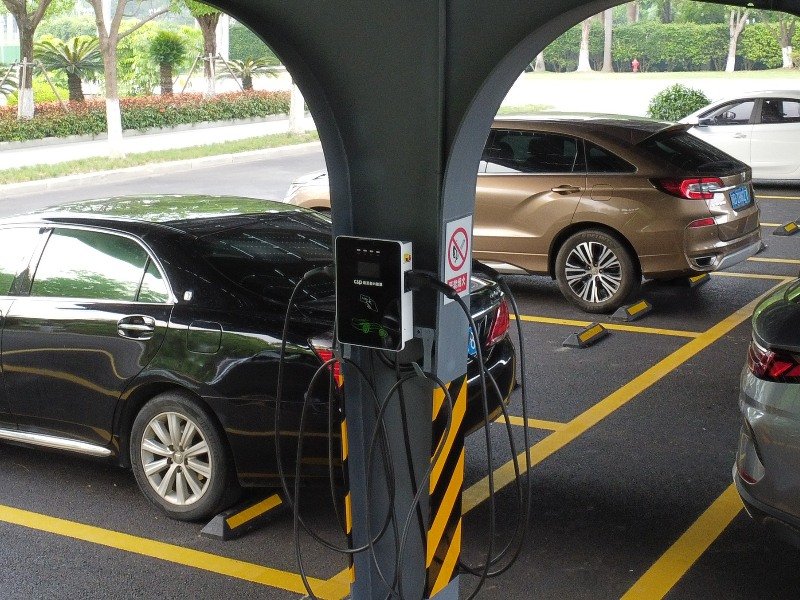
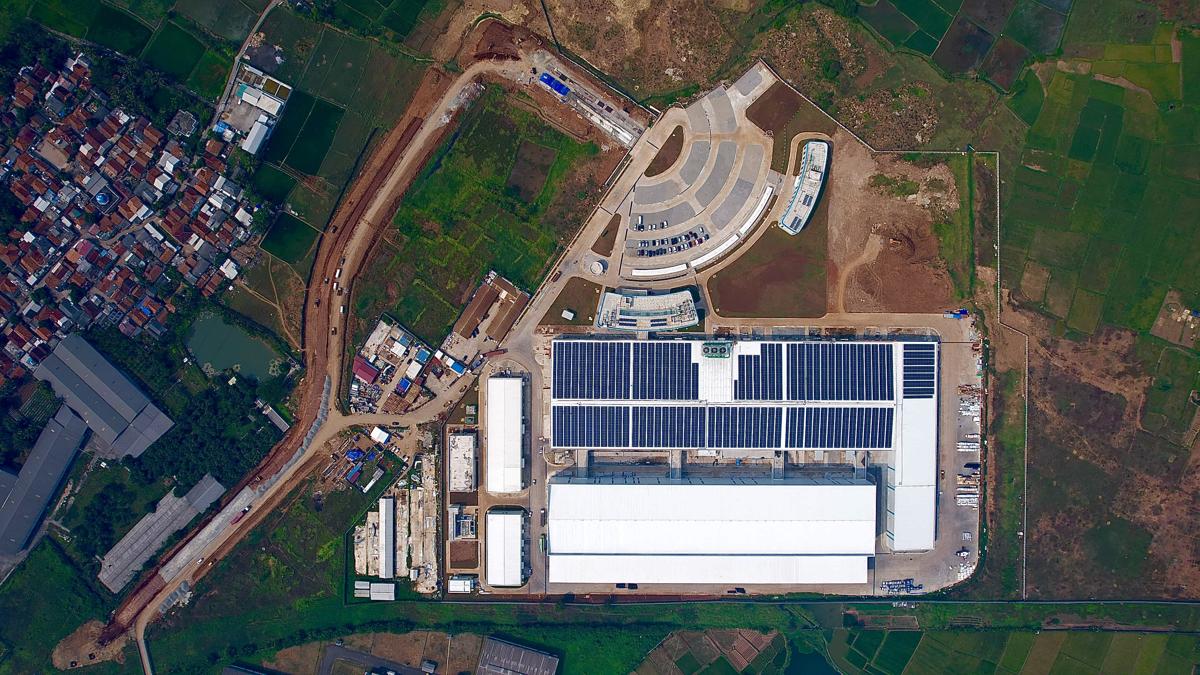
    Am 27. März 2024 gab C&D Inc (600153.SH) den offiziellen Baubeginn für das integrierte Projekt des 0,34-MW-Kraftwerks des Xiamen National Institute of Accounting Distributed bekannt. FotoVolta-Kraftwerk und Ladesäule unter C&D Emerging Energy Co., Ltd.Das Projekt befindet sich auf dem landschaftlich reizvollen Gelände des Nationalen Instituts für Rechnungswesen in Xiamen und erstreckt sich über eine Fläche von 1650 Quadratmetern, davon 450 Quadratmeter Dachfläche und 1200 Quadratmeter Carportfläche (BIPV). Die Anlage hat eine Kapazität von 0,34 Megawatt. Das Kraftwerk besteht aus 586 hocheffizienten monokristallinen Silizium-Solarmodulen mit je 580 W Leistung und drei 125-kW-Wechselrichtern. Es ist an ein 380-V-Niederspannungsnetz angeschlossen. Das Projekt verfolgt das Modell der Eigenstromerzeugung und erreicht somit eine nahezu vollständige Eigenversorgung. Berechnungen zufolge wird geschätzt, dass die durchschnittliche jährliche Stromerzeugung nach Abschluss des Projekts 373.000 kWh erreichen könnte, wodurch jährlich etwa 134 Tonnen Standardkohle eingespart und die Kohlendioxidemissionen um etwa 371 Tonnen reduziert würden, was erhebliche soziale, wirtschaftliche und ökologische Vorteile mit sich brächte. Das Xiamen National Institute of Accounting (ein Forschungsinstitut direkt dem chinesischen Finanzministerium unterstellt) ist eine bedeutende Ausbildungsstätte für hochqualifizierte Finanz- und Buchhaltungsexperten in China. Es beherbergt das von der chinesischen Regierung initiierte Forschungszentrum für Finanz- und Wirtschaftsentwicklung im Rahmen der „Neuen Seidenstraße“ sowie das ESG-Forschungszentrum. Als moderne, intelligente und landschaftlich reizvolle Ausbildungs-, Lehr- und Forschungseinrichtung mit internationalen Standards widmet es sich der Förderung von grüner Energie und nachhaltiger Entwicklung. Durch die Zusammenarbeit mit dem Xiamen National Institute of Accounting trägt C&D Emerging Energy Co., Ltd. zur nationalen Dual-Carbon-Politik bei, nutzt Dachflächen und reichlich vorhandene Solarenergie für die Photovoltaik-Stromerzeugung, übernimmt gemeinsam die soziale Verantwortung für Energieeinsparung und Emissionsreduzierung und etabliert ein positives Unternehmens- und Universitätsimage. Der Spatenstich für das 0,34-MW-Photovoltaikkraftwerk am Nationalen Institut für Rechnungswesen in Xiamen markiert einen wichtigen Schritt der C&D Emerging Energy Co., Ltd. beim Bau dezentraler Photovoltaikanlagen. Auch in Zukunft wird sich das Unternehmen verstärkt in die Entwicklung und den Ausbau dezentraler Photovoltaik und anderer neuer Energiefelder investieren und sich unermüdlich für ein grünes Lebensumfeld einsetzen. Damit leistet C&D Emerging Energy Co., Ltd. einen Beitrag zu den nationalen Zielen der Emissionsbegrenzung und Klimaneutralität. Das Projekt befindet sich auf dem landschaftlich reizvollen Gelände des Nationalen Instituts für Rechnungswesen in Xiamen und erstreckt sich über eine Fläche von 1650 Quadratmetern, davon 450 Quadratmeter Dachfläche und 1200 Quadratmeter Carportfläche (BIPV). Die Anlage hat eine Kapazität von 0,34 Megawatt. Das Kraftwerk besteht aus 586 hocheffizienten monokristallinen Silizium-Solarmodulen mit je 580 W Leistung und drei 125-kW-Wechselrichtern. Es ist an ein 380-V-Niederspannungsnetz angeschlossen. Das Projekt verfolgt das Modell der Eigenstromerzeugung und erreicht somit eine nahezu vollständige Eigenversorgung. Berechnungen zufolge wird geschätzt, dass die durchschnittliche jährliche Stromerzeugung nach Abschluss des Projekts 373.000 kWh erreichen könnte, wodurch jährlich etwa 134 Tonnen Standardkohle eingespart und die Kohlendioxidemissionen um etwa 371 Tonnen reduziert würden, was erhebliche soziale, wirtschaftliche und ökologische Vorteile mit sich brächte. Das Xiamen National Institute of Accounting (ein Forschungsinstitut direkt dem chinesischen Finanzministerium unterstellt) ist eine bedeutende Ausbildungsstätte für hochqualifizierte Finanz- und Buchhaltungsexperten in China. Es beherbergt das von der chinesischen Regierung initiierte Forschungszentrum für Finanz- und Wirtschaftsentwicklung im Rahmen der „Neuen Seidenstraße“ sowie das ESG-Forschungszentrum. Als moderne, intelligente und landschaftlich reizvolle Ausbildungs-, Lehr- und Forschungseinrichtung mit internationalen Standards widmet es sich der Förderung von grüner Energie und nachhaltiger Entwicklung. Durch die Zusammenarbeit mit dem Xiamen National Institute of Accounting trägt C&D Emerging Energy Co., Ltd. zur nationalen Dual-Carbon-Politik bei, nutzt Dachflächen und reichlich vorhandene Solarenergie für die Photovoltaik-Stromerzeugung, übernimmt gemeinsam die soziale Verantwortung für Energieeinsparung und Emissionsreduzierung und etabliert ein positives Unternehmens- und Universitätsimage.  Der Spatenstich für das 0,34-MW-Photovoltaikkraftwerk am Nationalen Institut für Rechnungswesen in Xiamen markiert einen wichtigen Schritt der C&D Emerging Energy Co., Ltd. beim Bau dezentraler Photovoltaikanlagen. Auch in Zukunft wird sich das Unternehmen verstärkt in die Entwicklung und den Ausbau dezentraler Photovoltaik und anderer neuer Energiefelder investieren und sich unermüdlich für ein grünes Lebensumfeld einsetzen, um zu den nationalen Zielen der Emissionsbegrenzung und Klimaneutralität beizutragen.

    MEHR ANZEIGEN
  • How to Choose the Right Home Battery Storage System
    November 24, 2026

    How to Choose the Right Home Battery Storage SystemSelecting a home battery storage system can feel like stepping into a maze of technical jargon, competing chemistry types, and warranty fine print. Many homeowners first encounter the topic during an outage or after receiving a surprisingly high electricity bill, only to discover that not all lithium-ion batteries are created equal. Pairing a solar array with the wrong storage configuration can lead to underperformance, premature degradation, or even safety risks. The stakes are high, but the process doesn't have to be overwhelming. This guide walks you through every critical factor—from daily consumption patterns and battery chemistry to inverter compatibility and supply chain reliability—so you can make a confident, data-driven decision. Along the way, you'll see how a global PV supply chain operator like C&D Clean Energy brings structured thinking to what is too often an unstructured purchase.Understanding Your Energy Consumption Pattern FirstBefore you even glance at catalogue specifications, you need a clear picture of your household’s electrical load profile. Every home has a distinct rhythm: a typical four-person family in a temperate climate might consume between 20 and 30 kilowatt-hours per day, according to the U.S. Energy Information Administration’s Residential Energy Consumption Survey, while a property with electric heating, a heat pump, and an EV charger could easily push past 40 kWh. The key variable is not the monthly total but the timing and the size of your peak power draws.Start by collecting at least 12 months of utility bills. Note the seasonal highs and lows. If you have a smart meter, download the 15-minute or hourly interval data—this granularity is worth its weight in gold. Identify your baseline load (fridge, networking equipment, security system) and the surge loads that happen when a well pump, air conditioner, or induction cooktop kicks on. These surge requirements determine the continuous and peak power ratings your inverter must handle, not just the energy capacity of the battery. Overlooking the distinction between kilowatt-hours (energy) and kilowatts (power) is the single most frequent sizing mistake.When you’ve mapped your consumption, think about your resilience goal. Do you want whole-home backup for multiple days, or is your priority simply to avoid peak time-of-use rates from 4 p.m. to 9 p.m.? A partial backup strategy often lets you specify a smaller, more cost-effective battery bank while still achieving an 80–90% reduction in grid electricity during high-tariff windows. Energy consultancy Wood Mackenzie found that the average U.S. residential storage system deployed in 2023 had a usable capacity of 13.3 kWh, a figure that illustrates the sweet spot between covering an evening’s essential loads and keeping the system’s physical footprint manageable.The Chemistry Behind the NameplateWalk through any storage product sheet and you’ll see acronyms like LFP, NMC, and sometimes NCA. The letters aren’t marketing fluff; they define the electrode materials and, therefore, the intrinsic safety, lifetime, and thermal behaviour of the cells. Lithium iron phosphate (LiFePO₄ or LFP) batteries have gained significant traction in residential applications because their olivine crystal structure remains stable at elevated temperatures, greatly reducing the risk of thermal runaway. Independent testing to UL 9540A and IEC 62619 shows that LFP cells typically pass nail penetration and overcharge abuse tests without flame or explosion, a safety profile that aligns with the compliance mindset of supply chain operators like C&D Clean Energy, which sources cells that meet UN38.3 transport regulations as a baseline.From a longevity perspective, LFP cells commonly deliver 4 000 to 6 000 charge-discharge cycles at 80% depth of discharge before reaching 80% of their original capacity. That figure comes from accelerated cycle-life testing documented in peer-reviewed publications by the Electrochemical Society and is validated by real-world field data from early residential installations in Germany and Australia. Nickel manganese cobalt (NMC) chemistries, by comparison, often clock 2 000 to 3 000 cycles under similar conditions, though they offer higher energy density—around 150–200 watt-hours per kilogram versus LFP’s 120–160 Wh/kg. For a stationary application where weight is irrelevant and cycle life directly translates to total lifetime throughput, LFP’s durability usually outweighs the density advantage. Many manufacturers now back LFP products with a 10-year warranty promising at least 70% end-of-warranty capacity, a confidence level that directly stems from the chemistry’s gentle ageing curve.Battery ChemistryTypical Cycle Life (to 80% SOH)Energy Density (Wh/kg)Thermal Runaway OnsetCommon WarrantyLFP (LiFePO₄)4,000–6,000120–160> 200 °C10 years / 70%NMC2,000–3,000150–200~ 150 °C7–10 years / 60–70%Lead-Acid (reference)300–80030–50N/A (electrolyte boiling > 80 °C)2–5 years, proratedData are typical ranges drawn from published academic reviews and manufacturer specification sheets. Actual performance depends on operating temperature, average state of charge, and charge/discharge rates.Sizing Isn’t Just About Kilowatt-HoursA common rule of thumb says “match the battery capacity to your daily solar excess,” but that shortcut ignores two crucial factors: depth of discharge limits and round-trip efficiency. Most sealed lithium systems allow 90–95% depth of discharge, meaning a 10 kWh nameplate unit delivers 9.0 to 9.5 kWh of usable energy. Round-trip efficiency, measuring how much AC energy comes out for every AC kWh put in, typically sits between 92% and 96% for modern lithium-iron-phosphate systems, as documented by the International Electrotechnical Commission’s efficiency testing standard IEC 62040‑3. Even a few percentage points matter when you’re cycling the battery every day: a 2% efficiency gap across 365 full cycles adds up to roughly 73 kWh of lost energy annually—enough to run an efficient refrigerator for two months.Power sizing requires equal attention. A battery may store 13 kWh of energy, but if its built-in inverter can only deliver 5 kW continuously, it won’t start a 3-ton central air conditioner whose locked-rotor amperage demands a brief 7–9 kW surge. When you evaluate a residential system, look for both the continuous output rating and the peak surge rating (usually specified for 10 seconds). Systems that stack multiple battery modules often support higher aggregate power, a consideration that becomes especially important for homes with well pumps, shop tools, or EV charger circuits that occasionally overlap.While you’re running these numbers, remember that your location’s grid codes and utility interconnection rules may impose additional limits. For instance, California’s Rule 21 and Hawaii’s advanced inverter requirements mandate specific ride-through behaviour, and not every off-the-shelf European or Asian product ships with firmware that satisfies those profiles out of the box.Matching the Storage to the Inverter ConfigurationYour choice of inverter architecture is the hinge on which the entire system swings. Two distinct paths dominate the residential market, and each links to a different type of inverter hardware. If you intend to stay connected to the grid while still using stored solar energy during outages, a Hybrid Inverter sits at the centre of the design. These units manage bidirectional power flow between the PV array, the battery, the home loads, and the grid. They automatically island the house during a blackout, creating a safe microgrid. Because hybrid inverters handle DC-AC conversion for both solar and storage in one box, they reduce component count and often qualify for a single streamlined installation permit.If your situation calls for complete energy independence—perhaps you’re building a cabin, a remote agricultural pump station, or a home where no utility line exists—the architecture changes. Here, an Off-grid Inverter becomes the system’s brain. Off-grid inverters must build their own stable voltage and frequency reference without a utility grid to lean on, a much tougher engineering challenge. Quality off-grid units incorporate heavy-duty transformers and oversized capacitor banks to handle the high inrush currents of pumps and compressors, and they typically pair with a separate solar charge controller sized for the array’s full rated power. C&D Clean Energy’s product portfolio spans both inverter categories, so you don’t have to cobble together components from three different vendors and hope they talk to each other.It’s worth spending ten minutes on the battery’s communication protocol, even if you’re not an engineer. Most reputable lithium batteries speak CAN bus using a well-documented protocol like Modbus RTU or CANopen. Closed-loop communication allows the battery management system (BMS) to tell the inverter exactly how much charge current it can safely accept, preventing premature wear during cold mornings or when the cells are nearly full. When you browse C&D Clean Energy’s full range of residential energy storage systems, check the listed inverter compatibility matrix. A BMS that has been pre-commissioned with multiple inverter brands slashes commissioning time and eliminates finger-pointing if something doesn’t work on day one.Environmental Conditions and the Real Installation SiteA battery’s datasheet capacity is measured at 25 °C and a specific C-rate, usually 0.5C. Install that same battery in an uninsulated garage where summer temperatures routinely climb above 40 °C, and you can expect accelerated calendar ageing—a fact confirmed by the Arrhenius equation’s prediction that chemical reaction rates roughly double for every 10 °C temperature rise. Cold is equally punishing: lithium plating can occur if you charge LFP cells below 0 °C without a built-in heating pad, permanently reducing capacity. That’s why northern European installations often specify batteries with integrated self-heating circuits that draw a small amount of grid or solar power to bring cells into the safe window before accepting charge.Ingress protection ratings provide a standardised lens for evaluating how well the enclosure resists dust and moisture. An IP65 rating, for example, guarantees protection against low-pressure water jets from any direction and total dust ingress, making it suitable for covered outdoor carports. An IP20 rating, by contrast, is designed for a clean indoor utility room and would quickly fail in a coastal environment where salt-laden humidity creeps into every crevice. The International Electrotechnical Commission’s standard IEC 60529 defines the test conditions behind these two numbers. Insist on seeing the test certificate, not just the logo printed on the side of the cabinet.Ventilation requirements also deserve a moment of thought. Although sealed LFP batteries emit no explosive hydrogen during normal operation, they still dissipate a modest amount of heat. A spacing of 300 mm around the unit is a common recommendation from installation manuals, and it’s a cheap insurance policy against nuisance BMS derating. If the only available wall faces direct afternoon sun, a simple louvred awning can drop the ambient temperature around the unit by 5–10 °C, extending its useful life by several years.Warranty, History and the Strength of the Supply ChainA residential battery is essentially a 15-year electrical appliance. The warranty document isn’t merely legal boilerplate; it tells you how much capacity the manufacturer expects to retain and under what duty cycle. Look for an unambiguous throughput guarantee expressed in megawatt-hours, not just a time limit. A 10-year warranty that also promises 70% capacity retention after 21 MWh of cumulative discharged energy gives you a transparent yardstick—if the battery is rated at 10 kWh usable, that’s equivalent to 2,100 full cycles, well within the 4,000-cycle envelope LFP can deliver. Warranties that are voided by “normal use in a residential standby application” or require annual Internet connectivity for logging are red flags that have trapped unwary buyers before.This is where the pedigree of the company standing behind the product becomes tangible. C&D Clean Energy is a subsidiary of Xiamen C&D Corporation Limited, a state-owned enterprise that ranked 98th on the Fortune Global 500 list in 2025 and generated annual revenue approaching RMB 700 billion with total assets of RMB 800 billion. Those numbers don’t directly impact your battery’s round-trip efficiency, but they indicate a depth of capital and global logistics infrastructure that can sustain a 15-year warranty commitment. As a professional PV supply chain operator, C&D Clean Energy integrates solar mounting systems, energy storage, and EV charger solutions under one roof, reducing the number of contractual relationships you need to manage from three or four to one. That simplification often translates into faster technical support when a firmware update or a grid-code revision rolls through your region.Quick Answers to Frequent QuestionsCan I expand my battery bank later?Yes, if you choose a modular system with a BMS designed for parallel stacking. Verify that the manufacturer supports mixing batteries of different ages without voiding the warranty. Some systems allow adding up to 10 modules per inverter; others cap at four. LFP’s flat voltage curve makes expansion technically easier than with NMC, but matching firmware versions across modules is essential.Is a hybrid inverter mandatory for solar-plus-storage?For a grid-connected home that wants backup capability, a hybrid inverter is the standard route because it manages PV, battery, and grid behind a single connection point. AC-coupled configurations using a separate PV inverter and battery inverter are possible but more complex to commission. If you are completely off-grid, a dedicated off-grid inverter paired with a charge controller is the more robust choice.How do I know if my local utility allows a battery?Most utilities in mature solar markets have published interconnection requirements for energy storage systems. You or your installer will typically submit a single-line diagram and a compliance certificate to the utility’s interconnection portal. Standards like IEEE 1547-2018 and UL 1741 SA cover the grid-support functions the inverter must perform. In some jurisdictions, a witness test may be required before you can export stored energy back to the grid.Moving Forward with a System That FitsA home battery storage decision ultimately rests on a tight alignment of three elements: a realistic load profile, an honest assessment of the installation environment, and a supply chain that will still be reachable a decade from now. Start by recording your peak power events, not just your cumulative energy usage. Choose LFP chemistry if safety and cycle life sit at the top of your priority list, and insist on seeing standardised test certificates like IEC 62619 and UN38.3. Match the inverter topology to your grid relationship, leaning on product lines that have been engineered to work together from the beginning. Finally, let the warranty’s throughput clause, not just the year count, serve as your quality benchmark.When you’re ready to move from a spreadsheet model to a physical quote, reach out to a professional integrator who can perform an on-site load study and design the racking and wiring layout. C&D Clean Energy’s team, supported by one of the world’s largest state-owned supply chain groups, can provide specification sheets, compatibility matrices, and logistics planning that turn a technically sound design into a smoothly executed installation. Investing a few extra hours in understanding these selection criteria now can prevent both buyer’s remorse and unnecessary service calls for the next 15 years of quiet, reliable operation.

    MEHR ANZEIGEN
  • How to Size a Solar Battery for Whole-Home Backup
    November 19, 2026

    How to Size a Solar Battery for Whole-Home Backup Most homeowners who add energy storage to their solar system want the same thing: peace of mind during a blackout. They want the refrigerator to keep humming, the lights to stay on, and the internet router to remain powered. Sizing a battery for that level of backup is not about picking the biggest model on the shelf. It requires a methodical look at daily consumption patterns, critical loads, battery chemistry, and inverter compatibility. A properly sized system will ride through long outages without wasting money on unused capacity. The process is straightforward once you break it down into measurable steps that any installer or technical buyer can follow. C&d Clean Energy, a global PV supply chain operator and professional solar mounting system integrator, works with installers and distributors who face these sizing decisions daily. The company’s residential lithium battery solutions and inverter portfolio are designed to simplify system configuration while meeting international safety standards. This article walks through the sequence that turns a utility bill and a load list into a defensible battery capacity number. Here’s what you’ll gain by the end: a method to calculate the exact kilowatt-hours your client’s home requires, insight into how depth of discharge and round-trip efficiency shape usable energy, criteria for matching a battery stack to an inverter, and a real-world sizing example that ties everything together. You will also see where a reliable supply chain partner adds value when multiple components—modules, mounting, storage, and EV charging—must arrive on schedule. Mapping Your Household Load Profile A battery backup project starts with a number that is often guessed but rarely measured: the daily energy consumption of the circuits you plan to protect. Without a realistic load profile, any sizing calculation is guesswork. The U.S. Energy Information Administration (EIA) reports that the average American household uses roughly 30 kWh of electricity per day, but that number varies dramatically by region, season, and home size. A well-insulated home in a mild climate might draw half that, while a large house with electric heating in a cold zone could easily exceed 50 kWh. Start by deciding whether the battery will cover the entire home or only a sub-panel of critical loads. Whole-home backup is the cleanest approach—it keeps the client’s lifestyle intact during an outage—but it requires a larger battery and inverter. Partial backup, where only the fridge, a few lights, the sump pump, and medical equipment stay powered, lowers the initial investment. Many installers ask the homeowner to identify absolute non-negotiables and then add a 20 percent buffer to account for unexpected usage or future loads. Once the load list is fixed, convert everything to watt-hours. A refrigerator might consume 1.5 kWh per day, a gas furnace fan 0.5–0.8 kWh, LED lighting another 1–2 kWh, and a home office setup 2–3 kWh. Modern smart plugs and clamp meters can measure actual usage over several days, and that data is far better than nameplate ratings. Utilities also provide hourly consumption data through green-button downloads. Use at least one full week to capture weekday and weekend profiles. If the budget permits, a whole-home energy monitor will record real-time data and reveal spikes that sizing spreadsheets often miss. With the daily watt-hours calculated, you have the core input for battery sizing. But that figure is just the starting point, not the answer. A battery never discharges all of its stored energy in normal operation, which brings the next variable into play. Calculating Capacity and Backup Duration A battery rated at 10 kWh cannot deliver 10 usable kilowatt-hours. The industry standard metric is depth of discharge (DoD)—the percentage of stored energy that can be drawn without accelerating degradation. For lithium iron phosphate (LiFePO₄) cells, the chemistry that dominates residential storage today, a DoD of 90–95 percent is typical. Lead-acid batteries, by contrast, usually stay at 50 percent DoD to preserve cycle life. So a LiFePO₄ battery labeled 10 kWh realistically provides 9 to 9.5 kWh of usable energy per cycle. To size for whole-home backup, divide the daily energy requirement by the usable fraction. If a home needs 25 kWh per day and you choose a battery with 90 percent usable capacity, you need roughly 27.8 kWh of theoretical storage. Factor in round-trip efficiency as well. Lithium-ion systems lose about 5 to 10 percent of energy during charging and discharging, meaning you might need an extra half-kilowatt-hour of solar input to fill the same battery. Inverter idle consumption—30 to 60 watts for a well-designed hybrid unit—adds another 0.7 to 1.4 kWh per day. Taken together, a 25 kWh daily load could require 30 kWh of nameplate battery capacity. Backup duration is the next layer. A one-day outage demands less storage than a three-day storm event. In regions with frequent multi-day blackouts, multiplying the daily load by the desired days of autonomy is common. A conservative approach is to design for two days of autonomy, then size the solar array to refill the battery in one average sun day. The National Renewable Energy Laboratory (NREL) provides typical peak sun hour maps that let you calculate required array wattage. A system that needs 30 kWh of daily charging in a location with 4 peak sun hours needs roughly 7.5 kW of solar panels, and that array must be properly mounted—whether on a flat roof, a ground structure, or a solar carport—to maximize yield. Depth of Discharge, Cycle Life, and Chemistry LiFePO₄ batteries dominate residential backup because they offer 4,000 to 6,000 cycles at 90 percent DoD before reaching 70 percent capacity retention. That translates into a decade or more of daily cycling. Market data shows that over 80 percent of new residential storage installations in 2024 used lithium iron phosphate chemistries, a trend driven by safety, longevity, and dropping costs per kilowatt-hour. When you evaluate a battery spec sheet, look beyond headline capacity. Two batteries may both claim 10 kWh, but if one limits DoD to 80 percent and the other supports 95 percent, the usable energy differs by 1.5 kWh per cycle. That gap compounds over the system’s life. Ask the supplier for cycling data under real-world temperature conditions because capacity degrades faster when the battery sits in an unconditioned garage where ambient temperatures swing from –10 °C to 45 °C. C&d Clean Energy’s residential lithium battery solutions are built on LiFePO₄ cells and are engineered to meet UL 9540 safety requirements, which the 2020 National Electrical Code requires for stationary energy storage systems. Compliance with that standard matters not just for inspection but also for fire safety and insurance eligibility. When integrating storage into a whole-home system, the battery must communicate correctly with the inverter, a point that leads to the next critical selection. Selecting the Right Inverter: Hybrid or Off-Grid The battery stores direct current, but the home runs on alternating current. The inverter bridges that gap, and the choice between a hybrid and an off-grid model shapes the entire backup architecture. A Hybrid Inverter combines solar charge control, battery management, and grid interaction in a single unit. It can operate in grid-tied mode while the utility is present and seamlessly switch to islanded backup when the grid fails. That makes it the most common choice for homes that stay connected to the utility but want automatic backup. Most hybrid inverters today support pass-through power of 7 to 10 kW, enough to run well pumps, air conditioner compressors, and electric ovens if the startup surge is managed correctly. An Off-grid Inverter is designed for sites without any grid connection—remote cabins, agricultural buildings, or eco-retreats. These units produce pure sine wave AC directly from the battery bank and often include heavy-duty chargers that can accept generator input. They do not need to synchronize with the grid, which simplifies internal electronics but means they cannot feed excess solar back to a utility. For a whole-home backup situation where the grid is normally present, an off-grid inverter can still be used if the system is wired as a completely isolated critical-load panel, but the owner loses the ability to export power and may need a separate charge controller for the solar array. That architecture is sometimes preferred in areas with unreliable grid power and frequent load-shedding, where the system effectively runs as a private microgrid. The inverter’s power rating must handle the peak wattage of the backup panel. A common trap is sizing only for steady-state load. Air conditioner motors, well pumps, and refrigeration compressors can draw three to seven times their running current for a few seconds at startup. An inverter that cannot deliver that surge will disconnect or fault. Look for inverter specifications that list both continuous power and surge power, typically in kilowatts. A 6 kW hybrid inverter with a 12 kW surge capacity for five seconds will reliably start most single-phase motors. Also check that the inverter and battery share a compatible communication protocol. Many manufacturers use CAN bus with proprietary or open protocols, and mismatched voltage ranges can cause shutdowns. C&d Clean Energy supplies Solar Inverter for PV System models that cover hybrid and off-grid topologies, simplifying procurement for distributors who need to match storage with a trusted inverter source. A single supply chain for modules, mounting, storage, and inverters cuts coordination delays and reduces the risk of in-field compatibility issues. A Real-World Sizing Walk-Through Consider a four-bedroom home in a temperate climate with a gas furnace, electric water heater, central air conditioning, and an electric vehicle charger used occasionally. Step 1: Critical load audit. The homeowner agrees to keep the fridge, freezer, furnace fan, well pump, router, and a few lights on during an outage. The air conditioner and EV charger will be shed automatically but can be manually toggled if solar production is strong. Metering over one week shows an average daily consumption of 18 kWh for the essential circuits. Step 2: Battery capacity. Desired autonomy is 1.5 days. Usable capacity needed: 18 kWh × 1.5 days = 27 kWh. With a LiFePO₄ battery offering 95 percent DoD, the nameplate capacity target becomes 27 ÷ 0.95 ≈ 28.4 kWh. After accounting for 92 percent round-trip efficiency and 50 W of inverter idle consumption, the adjusted required nameplate capacity sits near 30 kWh. A stack of three 10 kWh residential lithium batteries provides 30 kWh nominal and fits neatly into a garage or exterior wall. Step 3: Inverter sizing. The startup surge of the well pump peaks at 5,200 W, and the furnace fan adds another 800 W, so the inverter must supply at least 6 kW continuous and 9 kW surge. A hybrid inverter rated at 7.6 kW continuous and 11 kW surge meets these numbers and allows future solar expansion. Step 4: Solar array. To refill 27 kWh of usable storage in one day with 4.5 peak sun hours, the array needs to generate about 27 ÷ 0.9 (inverter efficiency) ≈ 30 kWh per day. Required DC array size: 30 kWh ÷ 4.5 h = 6.7 kW. An 8 kW array with high-efficiency modules provides a comfortable margin and offsets daytime loads while charging. Proper mounting—whether on a flat roof using ballasted racking or a ground-mount structure—ensures the array angle matches the installation latitude for maximum yield. Sizing Parameter Value Basis Daily critical load 18 kWh Metered sub-panel data Autonomy target 1.5 days Regional outage history Required usable capacity 27 kWh Load × autonomy Battery DoD (LiFePO₄) 95% Manufacturer spec Nameplate battery capacity needed 30 kWh 27 ÷ 0.95, plus efficiency Hybrid inverter continuous power 7.6 kW Surge margin included Solar array size 8 kW DC 4.5 peak sun hours This example illustrates that the math is simple, but the inputs must come from actual measurements and honest assumptions about backup lifestyle. Installers who skip the load audit often overspend on battery capacity or, worse, leave the client in the dark on day two of a storm. Supply Chain Integrity and Code Compliance A correctly sized battery system is only as reliable as the components inside it and the supply chain that delivers them. UL 9540 certification and compliance with IEC 62619 for lithium cells are table-stakes requirements for insurers and inspectors in most developed markets. Battery cabinets should carry ingress protection ratings of IP55 or higher if installed outdoors. Control electronics must be firmware-updated regularly to patch vulnerabilities, and the system should support over-the-air updates to avoid truck rolls. Procurement teams at installation companies often juggle separate suppliers for panels, racking, inverters, and storage. That fragmentation breeds delivery mismatches and finger-pointing when a part fails. C&d Clean Energy operates as a global PV supply chain operator, aggregating modules, mounting systems, residential lithium battery units, and inverters under one roof. The company’s corporate backing—Xiamen C&D Corporation, ranked 98th on the 2025 Fortune Global 500 list—gives buyers confidence that components will arrive on time with traceable provenance. Backed by nearly RMB 700 billion in annual revenue, the supply chain network sources from Tier‑1 manufacturers and maintains buffer stock for key SKUs. For buyers focused on whole-home backup, this integrated model also means the mounting structure—whether a solar ground mounting system or a flat-roof rack—is engineered to the same project timeline as the storage and inverter. Project logistics become predictable, and the single-point support accelerates commissioning. Frequently Asked Questions How long can a 10 kWh battery power a house? A 10 kWh LiFePO₄ battery with 90 percent usable capacity provides about 9 kWh. For a home using 1 kW of critical load (fridge, lights, router, furnace), that runs approximately 9 hours. Lower loads extend the time, but the exact duration depends entirely on which circuits are backed up and on outdoor temperature. Do I need a hybrid inverter for whole-home backup? Most grid-connected whole-home backup systems use a Hybrid Inverter because it manages solar, battery, and grid interaction automatically. An off-grid inverter works if the home is completely disconnected from the utility or if the backup panel is isolated. The choice hinges on whether net metering and grid export are required. Is one lithium battery stack enough for a typical home? One stack is rarely enough for true whole-home backup. A typical U.S. home consumes 25–35 kWh daily, so a stack of two or three 10 kWh modules is more realistic. Partial backup of essential circuits can often run on a single module, but the array must be sized to recharge it daily. How does depth of discharge affect battery lifespan? Higher DoD per cycle accelerates aging. Drawing a LiFePO₄ cell to 95 percent DoD every day shortens calendar life slightly compared to cycling at 80 percent. However, modern LiFePO₄ chemistries still deliver 10-plus years of daily service at high DoD, which is why they are the standard for residential storage. Can I add more batteries later? Yes, most modular lithium battery systems support parallel expansion. The inverter’s battery input current limit and communication bus determine the maximum stack size. When planning for future expansion, ensure the inverter is sized for the final battery capacity and that the mounting location has physical space for additional cabinets. Sizing a solar battery for whole-home backup is a disciplined engineering exercise, not a guess. It demands a hard look at actual consumption, a clear definition of which loads matter most, and a battery-inverter combination that can handle both steady power and startup surges. The numbers in the spreadsheet mean nothing unless the physical hardware meets certification standards and arrives on time. That is where an integrated supply chain operator removes the friction that slows down projects. Installers who treat the sizing process as a repeatable method—measure, calculate, verify, and then select compliant equipment—will build systems that deliver exactly what homeowners expect: power when the grid goes dark. Before committing to a design, share the load profile and proposed battery array with the supplier’s engineering team. Their feedback on inverter compatibility, racking layout, and site-specific DoD settings often catches details that generic online calculators miss. A few extra hours spent on the front end can prevent a callback and a battery that fails to keep the fridge running when it matters most.

    MEHR ANZEIGEN
  • Residential vs C&I Energy Storage: Which System Fits You?
    November 17, 2026

    Residential vs C&I Energy Storage: Which System Fits You? Choosing an energy storage system rarely starts with a simple price tag. Behind every project—whether a suburban home or a logistics warehouse—sits a distinct profile of load curves, tariff structures, and space constraints. For many property owners and facility managers, the conversation begins with the core power electronics. Pairing solar panels with the right inverter—whether a Hybrid Inverter for grid-interactive flexibility or an Off-grid Inverter for complete energy independence—establishes the technical boundary for the storage system you can deploy. The residential and commercial & industrial (C&I) segments diverge sharply beyond that point. One scales to fit a garage wall; the other demands transformer-level planning. This comparison unpacks the architectural, economic, and operational differences so you can match a system to actual site requirements, not marketing checklists. C&D Clean Energy, operating inside the Xiamen C&D Corporation—ranked 98th on the 2025 Fortune Global 500 and managing nearly RMB 700 billion in annual revenue—sees both segments deployed across 40-plus countries. That field experience surfaces a handful of truths few spec sheets capture. Key Takeaways Residential systems prioritize compact form factors and seamless backup, typically storing 5 kWh to 20 kWh per cabinet. C&I installations start around 50 kWh and routinely exceed 10 MWh, requiring active thermal management and dedicated switchgear. Inverter choice locks in topology early: hybrid architectures suit grid-assisted homes, while bidirectional PCS dominates C&I. Ownership models differ—residential leans toward self-consumption, C&I toward peak-shaving and demand-charge reduction. A supply chain operator with integrated mounting, inverter, and battery sourcing can cut procurement cycle time by weeks. How to Evaluate Energy Storage Options Before comparing individual systems, separate the decision layers. Energy storage rarely fails on chemistry alone; it fails when the battery, inverter, and mechanical integration were selected in isolation. Scale and voltage: Residential systems run on low-voltage DC (48 V nominal), while C&I frequently moves to high-voltage DC (600 V–1500 V) to reduce cabling losses and copper cost. Duty cycle: A home cycles once or twice daily. A factory may cycle 3–5 times per day, demanding a cycle life that exceeds 6,000 full-depth-equivalent cycles under industry test protocols such as IEC 62619. Fire safety and code path: Residential units must meet UL 9540A at the module level. C&I containers require gas detection, deflagration panels, and sometimes NFPA 855 compliance, depending on local AHJ interpretation. Communication and controls: Residential inverters speak Modbus RTU to a home energy management system. C&I plants speak IEC 61850 or DNP3 to a SCADA gateway. Keeping these layers visible prevents oversizing or, far more common, underbuilding the electrical infrastructure. Residential Energy Storage Systems — Powering the Home A typical single-family setup stores energy from a 7 kWp rooftop array and dispatches it during the evening peak. The battery cabinet—often a lithium iron phosphate (LFP) pack rated between 5 kWh and 15 kWh—mounts in a garage or utility closet. Physical footprint rarely exceeds 0.5 m². Most residential architectures couple the battery on the DC side of a hybrid inverter, which gives the owner the ability to island critical loads without a separate backup panel. The inverter’s continuous output typically falls in the 5 kW to 10 kW range. This matches the starting current of a well pump or a condensing unit, which is the real-world gatekeeper. Round-trip efficiency at rated power routinely touches 94 % (DC-coupled), though actual field measurements settle a point or two lower once auxiliary consumption and cell-balancing overhead are included. The economic driver is self-consumption. With net metering rules tightening, homeowners capture the 20 %–40 % spread between the daytime export rate and the evening retail tariff. Some European and Australian markets add grid-service payments for virtual power plant participation, but the single-site business case still rests on avoided import charges. Noise matters. Units below 5 kW of continuous charge/discharge normally stay under 35 dBA at one meter—quieter than a refrigerator compressor. That fact alone often decides the permitted mounting location. C&I Energy Storage Systems — Driving Business Efficiency Scale the same logic to a light-industrial building with a 150 kWp solar canopy and the storage conversation shifts from kilowatt-hours to power and C-rate. A 200 kW / 400 kWh system with a 0.5 C rate becomes a demand-charge scalpel, shaving the facility’s 15-minute interval peaks that a utility uses to set capacity charges. C&I systems are built around a bidirectional power conversion system (PCS) and a high-voltage battery rack, often inside an IP55-rated outdoor enclosure or a 20-foot container. A single rack may hold 100 kWh to 200 kWh, and multiple racks stack in parallel. System voltage sits at 800 V to 1500 V DC, which cuts the current and lets designers use smaller busbars. On the AC side, transformer-based solutions still dominate for 480 V three-phase connections, though transformerless 1,000 V platforms are gaining ground where utility grounding requirements permit. Cycle life requirements climb fast. A system that performs two demand-reduction cycles per weekday plus one weekend opportunity dispatch can hit 700 cycles annually. That pushes the cell specification toward 8,000-cycle LFP, with a usable depth-of-discharge window limited to 80 % to stay on the flatter portion of the voltage curve and preserve calendar life. Cooling strategy becomes a differentiator. Small residential packs rely on natural convection. A 400 kWh C&I cabinet generates 4 kW to 8 kW of heat at rated power, forcing designers to choose between active air cooling with front-to-back ducting and liquid cooling with a chiller loop. Liquid cooling shrinks cell temperature spread to less than 3 °C, which adds 15 %–20 % to expected cycle life in field data published by several battery OEMs. The trade is a higher auxiliary load and glycol maintenance. Project economics pivot around the demand-charge term. In markets where demand charges make up 30 %–50 % of a C&I bill, a properly sized system often reaches a simple payback between four and six years. Adding energy arbitrage or frequency response revenues can pull that inside three years, but those revenue streams require a site-specific interconnection study and utility dispatch interface that a residential system never touches. Side-by-Side Comparison Factor Residential Storage C&I Storage Typical energy capacity 5 kWh–20 kWh per cabinet 50 kWh–10 MWh+ per container System voltage 48 V DC (low-voltage) 600 V–1500 V DC (high-voltage) Dominant inverter topology Hybrid or AC-coupled string inverter Bidirectional PCS, often transformer-based Primary economic driver Self-consumption, backup Demand-charge reduction, peak shaving Cycle frequency 1–2 cycles/day 2–5 cycles/day Thermal management Passive convection Active air or liquid cooling Typical round-trip efficiency (DC) 92 %–95 % 90 %–94 % (including transformer losses) Permitting code path UL 9540A, NEC 706 UL 9540A, NFPA 855, local fire codes Space requirement 0.3 m²–0.5 m² 15 m²–30 m² for outdoor cabinets Communication protocol CAN, Modbus RTU Modbus TCP, IEC 61850, DNP3 Beyond the Battery: A Complete Supply Chain Perspective Single-component selection—buying a battery here and an inverter there—introduces integration risks that show up only at commissioning. When the inverter’s charge controller was tuned for a different cell voltage window, or the racking’s wind-load calculations assume a module weight that doesn’t include the DC optimizers, the remedy is expensive rework. C&D Clean Energy operates as a global PV supply chain operator, which means the team sources modules, racking, inverters, and battery systems through a unified procurement flow. The benefit is not theoretical. For a 1 MW C&I rooftop in Southeast Asia, aligning all major components under one logistics window cut vessel delays by three weeks compared to multi-vendor orders, simply because container consolidation and documentation were handled through a single point. That integration extends into the product catalog. The company’s full range of solar and storage components covers residential lithium batteries, ground-mount and floating solar structures, portable power stations, and the supporting inverter families. When a C&I project needs both a hybrid inverter for the office wing and an off-grid inverter for a remote pump station on the same campus, sourcing both through the same supply chain partner keeps the electrical topology consistent and the warranty chain intact. Matching Your Storage Choice to Your Operational Needs A system that fits a three-bedroom home will trip a factory’s main breaker in seconds. So the right question is never “residential or C&I?” but “what problem does storage solve on this site?” If your priority is… Choose… Because… Backup for lights, refrigeration, and internet Residential cabinet with hybrid inverter 5 kWh–10 kWh covers an 8-hour outage for essential circuits without over-investing Cutting a demand charge that represents 40 % of your bill C&I system with interval-meter-triggered dispatch The battery discharges only during the utility’s peak window, targeting the highest unit cost Managing a solar carport for a fleet of EVs C&I storage with DC-DC fast-charger integration A shared DC bus avoids another AC/DC conversion layer and improves site efficiency Adding storage to an existing residential array without rewiring AC-coupled battery with off-grid backup mode Retains the string inverter and adds a battery inverter that can form a microgrid Shipping product to multiple country markets with different grid codes Supply chain partner with local certification libraries Avoids maintaining a separate bill of materials for each grid-code variant Frequently Asked Questions How long do residential lithium batteries last in daily cycling? When operated at 25 °C and 80 % depth of discharge, most LFP residential batteries retain 70 % capacity after 6,000–10,000 cycles. That equates to roughly 15–20 years of daily use, though calendar aging and temperature extremes can shorten the window. Does a C&I system require a dedicated transformer? Not always, but many sites install a dedicated step-up transformer to isolate the battery from plant loads and meet utility interconnection rules. For systems above 500 kW, a transformer-isolated design simplifies protection coordination and reduces harmonic distortion. Can a residential storage system be expanded later? Some modular systems allow parallel stacking of additional battery cabinets, but the inverter must have been sized for the final capacity upfront. If the inverter’s charge/discharge current limit is already reached, adding more battery capacity alone won’t increase power output. What fire suppression does a C&I container need? Regulatory minimums typically include smoke and off-gas detection, an aerosol or water-mist suppression system, and deflagration venting. Jurisdictions following NFPA 855 often add a 3-foot clearance on the ventilation side and explosion-proof electrical fittings.

    MEHR ANZEIGEN
  • Wall-Mounted vs Stackable LiFePO4 Batteries: Which Suits You?
    November 12, 2026

    Wall-Mounted vs Stackable LiFePO4 Batteries: Which Suits You? Choosing between a wall-mounted and a stackable lithium iron phosphate (LiFePO4) battery feels like picking the foundation of your energy system. Both formats serve the same core purpose—storing solar power or grid energy for later use—but they differ in installation, scalability, and the physical space they demand. If you are deep in planning a residential storage upgrade or specifying a small commercial backup, you are exactly at the comparison stage that calls for a careful look at how these two architectures perform under real-world conditions. C&D Clean Energy operates at the intersection of global PV supply chains and integrated energy storage, backed by the strength of Xiamen C&D Corporation Limited, which ranked 98th on the Fortune Global 500 list in 2025. That logistical and technical spine means the company sees how both form factors are being deployed across markets from Australia to Europe. This article walks you through the structural differences, not to declare a universal winner, but to help you identify which configuration aligns with your site constraints, expansion roadmap, and maintenance habits. Key Takeaways Wall-mounted batteries excel in space-constrained indoor settings where a compact, fixed-power solution is enough. Stackable systems offer modular upward scaling, making them a better fit for growing energy demands or evolving backup requirements. Installation surface, weight distribution, and heat dissipation characteristics differ substantially between the two. Your choice often hinges on whether you prioritize one-time simplicity or long-term flexibility. Pairing either battery type with the right inverter—whether a hybrid or off-grid model—defines overall system performance. How to Evaluate a LiFePO4 Battery Form Factor Stripping the decision down to essential layers helps. Different form factors solve different physical and logistical constraints, and the right answer emerges when you weigh them against your actual project constraints: Space geometry: Does the site have unlimited floor area, or only vertical wall real estate available? Scalability: Will your storage needs remain flat for years, or do you anticipate adding capacity in blocks? Installation effort: A one-piece wall unit often requires fewer connections than assembling multiple stack modules. Thermal management: Batteries generate heat; the way they are oriented and spaced affects convection and cooling. Service access: Wall units may require lifting off a bracket for deep inspection, while stacks let you isolate individual modules. The evaluation becomes far more practical when you measure these factors against your building’s physical characteristics and your operational plan. No standard wins outright; each simply aligns better with a different set of priorities. Wall-Mounted LiFePO4 Batteries — Compact, Fixed-Capacity Storage A wall-mounted LiFePO4 pack hangs on a load-bearing wall much like a large electrical panel. Typical 48V residential units in the 5 kWh to 10 kWh range have a depth of only 150–200 mm, projecting minimally into the living or utility space. Because the entire system is a single steel enclosure, the installation team mounts a bracket, hangs the battery, and completes the DC and communication connections in one visit. The main strength here is spatial efficiency on the ground plane. If your equipment room already hosts an inverter, a charge controller, and junction boxes, reclaiming floor space often becomes the deciding factor. For a standard 48V 100 Ah wall unit, you might dedicate roughly 0.3 m² of wall area, leaving the floor entirely free. That matters in densely packed garages or utility closets. The weight—typically around 50 kg—demands secure anchoring into masonry or studs, so site assessment includes a structural check. From a thermal standpoint, a wall battery exposes its entire front and sides to ambient air. In an unconditioned space that stays below 35 °C, natural convection is usually sufficient. Manufacturers commonly recommend a minimum clearance of 200 mm around the unit, and the built-in battery management system (BMS) monitors cell temperatures continuously. One limitation surfaces when capacity needs grow: a wall battery is a fixed block. Adding a second unit means finding another wall section, routing parallel cabling, and ensuring the inverter can handle multiple battery inputs. It is not impossible, but it lacks the seamless expandability of a stackable system. Stackable LiFePO4 Batteries — Modular, Floor-Based Scaling Stackable battery families consist of individual 2.5 kWh to 5 kWh modules that lock together vertically, with the base module anchoring to the floor. Each module typically weighs 25–35 kg, so a two-person crew can lift and align them without a hoist. This modularity is the architecture’s defining advantage: you can commission a system with two modules today and click in a third module next year, as long as the total stack height and floor loading stay within limits. The footprint is modest but real. A tower of four or five modules might occupy a 550 mm × 350 mm rectangle on the floor, which is fine for a dedicated plant room but less appealing for a narrow hallway. The beauty of the stack concept lies in its service flexibility. If one module flags a fault, you can isolate it while the remaining modules continue operating. Technicians can swap the module without unmounting an entire enclosure. For off-grid applications where uptime is critical—think remote telecom sites or agricultural sheds—this granular resilience matters. Thermal design in stacks often uses inter-module air gaps and sometimes integrated micro-fans. Because the modules are separate blocks, heated air rises through vertical channels, which generally keeps cell temperatures balanced across the tower. Industry data from IEC 62619 compliance testing shows that LiFePO4 cells in stacked configurations maintain temperature variation within a typical range of 2–3 °C when operating at 0.5C charge/discharge in a 25 °C ambient, provided the stack has adequate side clearance. The trade-off is installation time. Each module requires power and data connections, plus physical latching. A site that calls for rapid deployment with minimal labor hours may lean toward a single wall unit. But for an energy system likely to evolve—say, a home that will add an electric vehicle charger later—the stackable approach prevents stranding assets. Side-by-Side Comparison Factor Wall-Mounted LiFePO4 Stackable LiFePO4 Typical capacity range 5 kWh – 10 kWh per unit 2.5 kWh – 5 kWh per module, stackable to 20 kWh+ Space profile Wall footprint ~0.3 m²; no floor usage Floor footprint ~0.2 m²; vertical space needed Weight handling Single lift ~50 kg; requires wall anchoring Per-module ~25–35 kg; floor load distributed Scalability Add parallel units (needs extra wall area) Snap on modules vertically; simpler capacity path Serviceability Whole unit must be dismounted for major repair Isolate and replace individual modules Installation speed Faster initial setup Extra module connections add time Thermal design Passive convection on exposed surfaces Vertical stack promotes chimney-effect cooling Aesthetics Clean, appliance-like front panel Industrial tower appearance When the choice is framed by these parameters, it becomes clear that the wall-mounted design wins on simplicity and space saving for fixed-capacity projects, while the stackable design answers the call where future-proofing and service ease carry more weight. Integrating Your Battery with the Right Inverter No battery operates in isolation. The inverter is the brain that decides when to charge from solar or grid and when to discharge to loads. Two broad inverter categories dominate residential and light commercial installations, and each interacts differently with your battery form factor. A Hybrid Inverter manages bidirectional power flow among PV panels, battery, grid, and backup loads in one box. It suits systems that stay grid-tied yet want battery backup. For wall-mounted setups, a hybrid inverter often sits below or beside the battery on the same wall, forming a clean, integrated energy center. Stackable configurations work just as well; you simply locate the stack near the hybrid inverter and run DC cables between them. Because hybrid inverters expect a battery voltage range—typically 42–58 V for 48 V nominal systems—both wall and stack batteries that comply with standard lithium iron phosphate voltage profiles integrate without extra converters. An Off-grid Inverter, by contrast, builds a microgrid without any utility connection. These are the workhorses of remote cabins, island resorts, and agricultural stations. Here, the battery’s modularity often becomes a bigger advantage. A stackable system lets the operator add modules as the off-grid load profile expands—perhaps from a basic lighting and refrigeration setup to a full workshop with power tools. Off-grid inverters also tend to have robust surge capacity for motor starts, so matching them with a battery that can deliver high peak currents is essential. Both wall and stack LiFePO4 packs typically support 1C continuous discharge, which covers most off-grid demands. C&D Clean Energy’s global supply chain position means you can source a complete energy storage solutions package—battery, mounting hardware, inverter, and PV modules—through a single procurement channel, which reduces the integration risk and warranty complexity that often arise when mixing suppliers. Which Battery Form Factor Should You Choose? If your priority is... Choose... Because... Maximizing floor space in a finished utility room Wall-mounted Leaves the floor clear and presents a tidy, low-profile appearance Starting with a minimal budget but planning to grow Stackable Add modules only when energy needs materialize, spreading costs Fast, standardized installation across many sites Wall-mounted Fewer connections per site; crews can complete one unit in less than an hour High availability with easy module-level maintenance Stackable Faulted module can be isolated; rest of the stack keeps running Integration into an existing off-grid inverter system Either Match battery voltage range and peak power; both forms meet the spec If the table suggests a close tie, revisit the physical site. Concrete walls in a basement favor wall mounting. A corner of a solar plant container or a purpose-built power shed often points to a stackable tower that can sit on a concrete plinth. And always confirm the battery’s IEC 62619 or UL 1973 certification status; certified packs carry independent validation of their safety systems, which is especially important when the battery lives inside an occupied building. The decision rarely comes down to raw performance metrics. LiFePO4 chemistry already delivers a cycle life that regularly exceeds 4,000 cycles at 80% depth of discharge, according to testing conducted under standard conditions. Energy density for mature LFP cells typically falls in the range of 100–160 Wh/kg. Those values hold across both packaging styles. What changes is how you live with the system over a decade of charge and discharge cycles, routine inspections, and occasional upgrades. The hardware you choose today should accommodate the person you will be five years from now—someone who might want to power a heat pump, charge a second EV, or support a home office through extended outages. Planning for that trajectory is what turns a storage purchase into a lasting energy asset. Frequently Asked Questions Can a wall-mounted battery be expanded later? Yes, but it usually involves adding a separate parallel unit on a nearby wall section. You must verify that your inverter supports multiple battery inputs and that the cable runs are balanced. This approach is feasible yet less elegant than clicking an extra module onto a stack. Do stackable batteries require more cooling? Not necessarily more cooling, but they use a different cooling path. The vertical arrangement encourages natural convection; as air warms between modules, it rises and draws cooler air from below. Many stacks meet thermal requirements without forced-air fans, though some high-power designs include small internal fans as a precaution. Is one type safer than the other? Both wall-mounted and stackable LiFePO4 batteries can achieve the same safety certifications (e.g., IEC 62619, UN38.3). Safety depends on the battery management system’s quality and the enclosure’s mechanical integrity, not on the mounting method. A properly installed, certified battery in either form factor presents a well-managed hazard profile. How important is the inverter choice when selecting the battery style? The inverter choice is equally important regardless of battery form factor. A hybrid inverter simplifies on-grid backup setups, while an off-grid inverter is mandatory for stand-alone systems. The battery must match the inverter’s DC voltage range and communication protocol. Both wall and stack batteries from reputable suppliers are designed to align with common inverter specifications. Does a stackable system save money in the long run? It can, because you invest in capacity only as the load grows, avoiding a large upfront expenditure on unused energy storage. Maintenance costs may also be lower when a single module can be serviced without replacing an entire unit. The exact savings vary with the load profile and the cost of additional modules over time.

    MEHR ANZEIGEN
  • How to Choose a Solar Mounting System for Your Roof Type
    November 09, 2026

    How to Choose a Solar Mounting System for Your Roof Type Getting a photovoltaic array onto a roof isn't just about picking panels with the highest wattage. The mounting system—those rails, clamps, and brackets that hold everything in place—does the heavy lifting for decades, often without much thought until something goes wrong. Pick the wrong structure for your roof profile, and you risk leaks, blown modules, or a costly tear-off three years in. This guide walks commercial and residential solar installers and procurement teams through the critical factors that match a mounting system to a specific roof type. Because when you’re sourcing for dozens of projects—or a single high-value installation—the right choice from day one determines long-term yield and liability. Why Roof Type Dictates Mounting Strategy Every roof presents a different set of attachment points, load paths, and waterproofing challenges. An asphalt shingle roof on a 6:12 pitch in a hurricane zone behaves nothing like a low-slope membrane roof on a commercial warehouse. Building codes such as the International Building Code (IBC) and ASCE 7-22 set baseline structural demands, but the local interpretation—wind zone, snow load, seismic category—adds granular requirements. The mounting hardware must respect the roof covering's ability to remain watertight, distribute dead and live loads without exceeding the structure’s capacity, and survive uplift forces that can reach over 30 pounds per square foot in extreme regions. Behind the product choice sits a larger supplier reliability question. C&D Clean Energy, backed by Xiamen C&D Corporation Limited—a state-owned enterprise founded in 1980, ranked 85th on the 2024 Fortune Global 500 list and 98th in 2025, with nearly RMB 700 billion in annual revenue and 800 billion yuan in total assets—brings a global supply chain operation to the solar racking category. That scale matters when you need certified systems that ship on time and hold up in the field. Roof Types and the Hardware That Fits Them Asphalt Shingle Roofs (Pitched, Residential) Most residential installations land on composition shingle roofs with slopes between 4:12 and 12:12. The standard approach uses rail-based systems anchored into the rafters with lag bolts and sealed with flashing at each penetration. The flashing (typically aluminum or galvanized steel) slides under the shingle course to direct water away. Look for mounting systems with integrated rubber gaskets that compress around the bolt shank when torqued to manufacturer spec—usually 10–15 ft-lbs—creating a double barrier. A common misstep: using a universal flashing that doesn’t match the shingle profile exactly. In northern climates, ice dam formation can drive meltwater under poorly fitting flashings, causing slow rot that goes unnoticed until the decking fails. The International Association of Certified Home Inspectors notes that roof leaks account for nearly 40% of all construction defect claims, many tied to flashed penetrations. Metal Standing Seam Roofs Standing seam metal roofs, often found on agricultural buildings, modern residential designs, and commercial low-slope applications, offer a non-penetrating opportunity. Clamp-based mounting systems grip the raised seams without drilling into the roof surface, preserving the factory finish and weathertightness warranty. The critical check: the seam profile—whether trapezoidal, snap-lock, or double-fold—must exactly match the clamp jaw geometry. A mismatch of even 2 millimeters can cause micro-slip under thermal expansion cycles, eventually wearing through the metal panel coating. Wind uplift is the controlling load here. Tests per UL 2703 or ASTM E1592 standards simulate the pull-out resistance of clamps on specific seam types. A system rated for 90 mph exposure category C won’t automatically work in a 150 mph coastal location. Always cross-reference the racking supplier’s certified wind tunnel report against the project’s design wind speed from ASCE 7-22. Flat and Low‑Slope Membrane Roofs (Commercial) Flat roofs—technically those with slopes below 2:12—cover everything from big-box retail to medical offices. The challenge shifts from watertight penetrations to load distribution and membrane protection. Three common strategies exist: Ballasted systems: Concrete blocks hold the array down without any fasteners penetrating the membrane. Works well on concrete decks where the structure can handle the added weight, typically an extra 3–6 psf over the solar panel and racking mass. Mechanically attached systems: Fasteners pass through the membrane into the structural deck, sealed with prefabricated flashing sleeves. More common on steel deck roofs where ballast weight would exceed limits. Hybrid systems: A combination of light ballast at the perimeter and chemical or mechanical attachments at critical zones to resist wind uplift. A structural engineer must verify that the dead load of the fully installed system, plus the live load from snow or maintenance personnel, stays below the roof’s design capacity. The American Society of Civil Engineers recommends a minimum roof live load of 20 psf (0.96 kPa) for ordinary flat roofs; in snow country, local codes often drive that figure above 40 psf. Tile Roofs (Clay or Concrete) Tile roofs, common across Mediterranean and Southwest U.S. architectures, present a delicate problem. The tiles themselves are brittle and cannot bear weight directly. Installers use tile-replacement hooks or brackets that attach to the roof batten or rafter, with a contoured metal piece replacing the tile that was removed. The mounting foot sits proud of the tile surface, and the tile above it is notched to fit. This preserves the roof’s aesthetic and drainage channel while transferring loads to the structural framing. The risk: inexperienced crews break multiple tiles during installation, leading to hot spots where water can penetrate. A single broken clay tile can compromise a section of underlayment, requiring a roofing specialist to repair. That’s why many integrators partner with suppliers like C&D Clean Energy, who pre-engineer tile hook kits for common regional tile profiles and provide load test data in advance, cutting field guesswork. Critical Engineering Parameters to Verify Dead Load and Uplift Ratings Beyond the ballpark numbers, the exact dead load includes the weight of the modules, rails, clamps, and any additional components such as microinverters or optimizers. Commercial 72-cell modules typically weigh 44–56 pounds each (2.8–3.5 psf). With racking, the combined load rarely exceeds 5 psf—well within the tolerance of most roofs built after modern codes. However, older structures or those with compromised decking may need reinforcement. Uplift resistance demands separate analysis. Wind flowing over a roof creates negative pressure that tries to peel the array upward. Mounting systems tested to UL 2703 list maximum design pressure in pascals or psf. For a typical project in a 115 mph wind zone (ASCE 7 Risk Category II), design uplift at the corner zones can exceed 30 psf. Always request the supplier’s engineering certification that shows calculated capacities of their attachments in the specific deck or rafter material at the project site. Material Compatibility and Corrosion Galvanic corrosion occurs when dissimilar metals contact in the presence of moisture. An aluminum rail bolted to a zinc-plated steel bracket sounds innocent until electrolysis accelerates rust within five years in a coastal saline environment. The 2021 National Electrical Code (NEC) requires bonding and grounding pathways that consider these long-term material interactions. C&D Clean Energy’s racking portfolio includes ZAM-coated steel components—zinc-aluminum-magnesium alloy coatings derived from steel strip technology—that provide corrosion resistance several times that of conventional hot-dip galvanized steel in salt spray tests per ASTM B117. This isn’t marketing fluff; independent studies by the International Zinc Association show that ZAM coatings experience corrosion rates below 2.0 g/m² per 24 hours under standard salt spray, compared to 5.0–8.0 g/m² for typical G90 galvanized steel. For roofs within 3 miles of a coastline, choosing materials tested to at least 1,000 hours of salt spray without red rust moves from “nice to have” to a contract requirement. Linking the Array to the Inverter Strategy Mounting systems and inverters are physically separate products, but their design choices intersect. The array layout—how many strings, where they terminate—determines the length of home-run wiring and the best location for a string inverter or combiner box. When a project incorporates battery storage, the inverter must manage bidirectional power flow. For those projects, a Hybrid Inverter becomes necessary; it controls both grid interaction and battery charging from the roof-mounted PV source. The mounting layout must leave enough clearance around the array edges for combiner boxes and rapid shutdown devices, as mandated by NEC 690.12. For installations where no utility connection exists—remote agricultural pumps, off-grid cabins, telecommunications shelters—an Off-grid Inverter converts DC power directly from the roof array to AC, often charging a battery bank simultaneously. The mounting system in these scenarios faces heightened mechanical scrutiny because there’s no grid-tie fallback: if the structure fails in a winter storm, the power outage is absolute. C&D Clean Energy’s integrated supply chain allows customers to source both the racking and the inverter from one partner, simplifying logistics and warranty coordination. The racking system can be bundled with the company’s Solar Roof Mounting System category, which covers flat roof, pitched roof, and tile roof sub-systems under one product portal. Typical Roof-Mounting System Selection Matrix The table below matches common roof types to mounting methods and key considerations. Use it as a starting point for RFQ documentation, but always confirm with a licensed structural engineer for any specific project. Roof Type Slope Range Preferred Mounting Style Critical Verification Typical Load Add (Dead) Asphalt shingle 4:12–12:12 Rail-based with lag bolt and flashing Rafter spacing and flashing compatibility 3–5 psf Metal standing seam 1:12–12:12 Seam clamp (non-penetrating) Clamp-jaw fit to seam profile; wind tunnel report 2.5–4 psf Flat membrane (EPDM/TPO) 0:12–2:12 Ballasted, mechanically attached, or hybrid Membrane puncture resistance; structural deck capacity 4–7 psf (ballasted) Clay/concrete tile 4:12–12:12 Tile-replacement hooks/brackets Tile profile match; breakage risk 3–5 psf Corrugated metal 2:12–12:12 Through-bolt with EPDM washers or clamp onto purlins Purlin spacing; seal integrity at penetrations 3–4 psf Wind uplift design pressure—always checked from project-specific wind maps—should not exceed the rated capacity of the mounting attachments. For reference, ASCE 7-22 design pressures in high-wind zones can exceed 40 psf at roof corners. Avoiding the Pitfalls That Derail Projects Skipping the roof condition report. A 15-year-old asphalt shingle roof near the end of its service life isn’t a suitable substrate for a 25-year PV system. Pay for a certified roof inspection and moisture scan before signing a mounting system purchase order. Mixing brands of clamps and rails. UL 2703 certification is granted to a specific combination of module frame and mounting hardware. Substituting a clamp from one manufacturer onto a rail from another voids the listing and, in many jurisdictions, fails the permitting process. Stick with a single OEM system that provides an NRTL listing. Ignoring thermal expansion. Aluminum rails expand 0.000013 inch per inch per degree Fahrenheit. On a 100-foot row in a climate with a 100°F temperature swing, that translates to roughly 1.5 inches of movement. Slotted connections and expansion joints prevent buckling that can shear off attachments. A global supply chain operator like C&D Clean Energy—part of Xiamen C&D Inc., a Fortune Global 500 enterprise with a 40+ year track record—mitigates sourcing risk by maintaining consistent product batches with documented mill certifications. When you’re comparing suppliers, ask for mill test reports on the steel coil used for ZAM racking; reputable integrators provide them without hesitation. Frequently Asked Questions How do I know if my roof can support a solar array? A structural engineer calculates the combined dead and live load against the roof’s design capacity. For reference, the IBC minimum roof live load is 20 psf, and a typical array adds 3–5 psf. Most modern roofs have capacity to spare, but older structures can require reinforcement. What’s the difference between a rail-based and rail-less mounting system? Rail-based systems use continuous aluminum rails to which modules clamp. Rail-less (or direct-attach) systems fasten module frames directly to roof attachments, reducing component count and weight but demanding tighter tolerance control on the roof plane. Can I install a solar mounting system myself? Commercial systems require licensed electricians and often structural P.E. stamps. DIY installations on residential roofs may violate local building codes and void roofing warranties. Even professional contractors should take manufacturer training on the specific racking product before their first project. How long should a solar mounting system last? Quality aluminum and ZAM-coated steel systems carry 20- to 25-year warranties, matching the typical panel lifecycle. The limiting factor is often the roof itself. In coastal environments, opt for coatings tested to at least 1,000 hours of salt spray resistance per ASTM B117. Do I need a hybrid inverter for every battery-backed system? If you plan to both charge batteries from solar and sell power back to the grid, a hybrid inverter is essential. For purely off-grid systems with no grid connection, an off-grid inverter suffices. C&D Clean Energy supplies both types through its global PV supply chain. Selecting a solar mounting system that fits your specific roof type is the linchpin of a safe, durable, and code-compliant installation. Start with a detailed roof survey and wind load determination, match the attachment method to the roof covering without compromising waterproofing, and verify material certifications before a single rail arrives on site. Working with a vertically integrated supplier that understands the entire solar ecosystem—from racking to Hybrid Inverter and Off-grid Inverter solutions—reduces coordination errors and ensures that every component, from the roof attachment to the inverter output, meets the same engineering standards. For procurement teams and installers alike, the path to a trouble-free array runs through the roof, not around it.

    MEHR ANZEIGEN
  • How to Pick an EV Charger: 7kW AC vs 240kW DC Fast Charging
    November 04, 2026

    How to Pick an EV Charger: 7kW AC vs 240kW DC Fast Charging The moment you move from a single electric vehicle to a small fleet or a public charging bay, the question stops being “should I install a charger?” and becomes “which class of charger actually fits my daily operating rhythm?” On one side sits the quiet, ubiquitous 7kW AC wall box — the workhorse of overnight home and office charging. On the other side stands the 240kW DC fast charger, often combined with liquid-cooled cables, designed to refill a battery in the time it takes to drink a coffee. Neither is inherently better. The right choice depends on dwell time, grid capacity, battery voltage, and how the charger will interact with other on-site energy assets such as a solar array or a battery storage system. Buyers who manage logistics depots, shopping centers, highway rest stops, or commercial fleets quickly realize that picking an EV charger is less about headline power numbers and more about a careful match between vehicle acceptance rates, charging curves, and the electrical infrastructure you already have — or plan to build. As a global PV supply chain operator and energy storage system integrator, C&D Clean Energy routinely helps businesses align those dots, often pairing chargers with a Solar Inverter and battery to form a self-reinforcing energy loop. This comparison outlines the key engineering and operational differences between 7kW AC and 240kW DC fast charging so you can make a decision based on site realities, not marketing brochures. Key Takeaways 7kW AC chargers serve locations where vehicles sit for four to ten hours, making them perfect for workplaces, residential complexes, and overnight depot charging. 240kW DC units deliver high power directly to the battery, cutting charge sessions to 15–30 minutes but demanding substantial grid upgrades and thermal management. Total cost of ownership diverges dramatically: one favors low upfront investment with slow throughput; the other favors high vehicle turnover despite six-figure installation budgets. The most capital-efficient setup often blends both charger types and ties them into on-site solar generation and battery storage, flattening demand charges and raising self-consumption. What Drives the Gap Between 7kW and 240kW Charging The difference starts with how electricity reaches the battery. A 7kW charger sends alternating current to the vehicle’s onboard rectifier, which the car itself converts to direct current before pushing electrons into the cells. That onboard charger is typically rated between 7kW and 11kW in modern passenger cars — hence the prevalence of 7kW AC units. Because the conversion happens inside the car, the external charger is largely a safety-compliant power delivery interface, governed by standards such as IEC 61851-1 Mode 3. Installation is straightforward: a single-phase 230V supply at 32A yields roughly 7.2kW, enough to add around 35–40 km of driving range per hour for a mid-size EV with a 60kWh battery. A 240kW DC fast charger bypasses the onboard charger entirely. It performs the AC-to-DC conversion inside an industrial rectifier cabinet and feeds regulated DC power directly to the battery management system, often at voltages ranging from 200V to 1000V. Current delivery can exceed 400A, which is why you see those thick, actively cooled cables. Power levels are governed by communication protocols like CCS (Combined Charging System) or CHAdeMO, which constantly negotiate voltage and current based on temperature and state of charge. According to the standards body CharIN, CCS-compliant chargers can scale well beyond 350kW, making the 240kW class a mature, widely deployed sweet spot for highway corridor use. 7kW AC Charging: The Predictable Workhorse Think of a 7kW unit as a patient refill strategy. A delivery van that returns to the depot at 6 p.m. and leaves at 6 a.m. has a 12-hour window. Even with a 60kWh pack, the theoretical full charge time sits around 8.5 hours, leaving comfortable margin before the next shift. In practice, because the charging curve is flat — AC charging doesn’t taper as aggressively as DC — the power holds steady until the battery is nearly full, making energy transfer predictable and grid-friendly. Installation costs run low. Hardware for a dual-gun 7kW smart charger often falls in a range of $400 to $1,200, and a typical install with a dedicated circuit stays within $1,500 to $3,000 per station, depending on trenching and panel upgrades. Maintenance is minimal: with no internal high-power rectifier, the charger generates little heat and has a long service life. Businesses with a roof-mounted solar array find these chargers particularly attractive because a 7kW load aligns well with a modest PV string’s daytime output. Pair that with a Hybrid Inverter and a battery buffer, and you can top up fleet vehicles almost entirely from stored solar energy during peak-rate hours, dodging demand charges. The limitation is throughput. If a location needs to turn over 20 vehicles between 10 a.m. and 2 p.m., seven kilowatts won’t cut it. That’s where the DC fast charger enters the picture. 240kW DC Fast Charging: The High-Turnover Engine A 240kW DC station pulls roughly the same energy in 15 minutes that a 7kW unit delivers in two hours. Car manufacturers commonly state 10–80% charge times around 18–22 minutes for vehicles with 800V architecture when connected to a 240kW or higher dispenser. This makes it the tool of choice for public fuel-station-style hubs, highway service areas, and high-utilization fleet depots where vehicles must get back on the road fast. Yet speed introduces complexity. First is the grid connection. A 240kW charger typically requires a 400V/480V three-phase supply and a dedicated transformer, with installation costs frequently landing between $80,000 and $120,000 per dispenser, according to estimates from the U.S. Department of Energy’s Alternative Fuels Data Center. Civil works, switchgear, and utility upgrades can push the total well above $150,000. Second is heat: the rectifier stack operates at high power, demanding active cooling that consumes additional energy and requires regular maintenance on filters and coolant loops. Third is the charging curve: a 240kW session rarely sits at 240kW for long. Above about 60–70% state of charge, the battery management system throttles the current to protect cell health, so the advertised peak power is more a headline than a plateau. Despite those caveats, DC fast charging is indispensable for any site serving a variety of vehicle types with unpredictable arrival patterns. And when combined with on-site energy storage, it can make economic sense even at locations without heavy grid infrastructure. A stationary battery pre-charged by solar during the day can discharge into the DC charger during a session, buffering the grid and cutting demand peaks. That architecture — solar to battery to vehicle — is one of the reasons many operators now look at EV charging not as a standalone electrical project but as part of an integrated microgrid. Where C&D Clean Energy Bridges the Gap Many buyers approach the decision as a binary: pick AC or pick DC. In practice, mature projects often blend both. A logistics terminal might install a dozen 7kW AC outlets for overnight charging along a perimeter wall while placing one or two 240kW DC dispensers at the entry gate for quick top-ups between shifts. The piece that makes this economical is shared infrastructure — especially when the site already has a solar carport and a containerized battery system. C&D Clean Energy operates precisely at that intersection. As a global PV supply chain operator and energy storage system integrator, the company supplies not only the solar mounting structures and lithium battery packs but also the inverter ecosystem that ties them together. For a site that wants to maximize self-generated energy, a Off-grid Inverter can run the entire microgrid independently, while a hybrid inverter keeps the battery cycling efficiently in a grid-tied setup. These components become even more relevant when you realize that a 240kW charger on its own can trigger demand charges that exceed the energy cost, whereas a properly sized storage buffer — often built with LFP rack batteries — can absorb PV output across the day and release it during a 15-minute fast-charge window, smoothing the load profile to just a few dozen kilowatts from the utility. No single charger solves that problem alone. The charger performs best when treated as one node in a wider solar-plus-storage-plus-charging system. Side-by-Side Comparison Factor 7kW AC Charger 240kW DC Fast Charger Power delivery AC to vehicle’s onboard charger DC directly to battery, bypassing onboard charger Typical voltage & current 230V single-phase, 32A max per IEC 61851-1 Mode 3 200–1000V DC, up to 400A, CCS or CHAdeMO protocol Charge time (60kWh battery, 20–80%) Approximately 5–6 hours 15–25 minutes under ideal conditions Installed cost per port $2,000–$5,000 (hardware + labor) $80,000–$150,000+ (incl. transformer, switchgear) Grid requirement Standard 230/400V distribution panel Dedicated 400–480V three-phase, often new service drop Heat management Passive cooling sufficient Active liquid or forced-air cooling necessary Best application Depot overnight charging, workplace, residential Public fast-charge hubs, highway corridors, high-turnover fleets Solar+storage pairing Pairs easily with modest PV array and residential/C&I hybrid inverter Benefits greatly from large solar canopy and stationary battery buffer A Decision That Follows Use Patterns, Not Power Ratings Financial models for charging infrastructure turn less on the sticker price of the hardware and more on the number of sessions per day and the average energy dispensed. A single 7kW charger may deliver 50–70 kWh during a 10-hour overnight shift. A single 240kW charger, cycled efficiently, can push 500–800 kWh in a 12-hour operational window — but only if the vehicles arrive with low state of charge and accept high current. If your fleet runs predictable, short daily routes, a bank of 7kW chargers might cover 90% of needs at a fraction of the capital outlay. If you operate a taxi fleet that works double shifts, you need DC. One underappreciated aspect is the role of the battery’s voltage architecture. Vehicles with 400V systems (common in many mid-range EVs) may only pull 80–120kW on a 240kW station because the current limit prevents higher power. Vehicles with 800V systems — increasingly standard in heavy-duty trucks and premium passenger cars — can use the full 240kW. So a depot that mixes old and new vehicles often ends up installing both AC and DC hardware, each serving a specific part of the fleet. Frequently Asked Questions Can I install a 240kW DC charger at a location with just a 100A commercial service? Rarely. A 240kW charger alone can draw over 300A at 480V three-phase, exceeding the capacity of a 100A service. Most sites will need a dedicated transformer and possible utility upgrades. It’s common to pair a DC charger with an on-site battery to buffer the grid and reduce the required service size to something manageable. How much solar generation do I need to support a 7kW AC charger? A 7kW charger draws roughly the same power as a 10kWp solar array produces at peak sun. In an average climate, a 10–12kWp system with a hybrid inverter and a 15–20kWh battery can supply one 7kW charger for a substantial portion of daytime sessions while storing excess for evening top-ups. Is there a middle ground between 7kW and 240kW? Yes. 22kW AC chargers (three-phase) and 50–120kW DC chargers fill the gap. 22kW AC can halve charging time compared to 7kW but requires a three-phase supply and a compatible onboard rectifier. 60–120kW DC chargers offer faster than AC but with much lower infrastructure demands than 240kW, making them popular for urban retail car parks and medium-duty fleets. The decision tree should always weigh actual dwell time and vehicle acceptance rates before picking a power class.

    MEHR ANZEIGEN
  • Balcony Solar Power Plants: A Beginner Guide for Apartments
    November 02, 2026

    Balcony Solar Power Plants: A Beginner Guide for Apartments Generating your own electricity no longer requires a sprawling rooftop or a standalone house. A balcony solar power plant—often called a plug-in solar system or Balkonkraftwerk—puts renewable energy generation within reach of apartment dwellers. These compact arrays clamp onto railings or sit on balcony floors, feed electricity directly into your home circuit, and slash utility bills with minimal bureaucratic fuss. For anyone who rents or owns a flat and thought solar was off limits, a balcony system changes the equation. This guide walks you through the technology, component selection, practical limitations, installation, and long-term value of a small-scale solar plant engineered specifically for apartment living. Whether you are looking to offset standby loads, charge devices, or simply take a first step into energy independence, understanding how these systems work and how to evaluate their quality will save you time and money. C&d Clean Energy operates as a global PV supply chain integrator, backed by Xiamen C&D Corporation Limited—a Fortune Global 500 enterprise ranked 112th in 2026—so we see daily how well-chosen components dramatically affect real-world performance. Let’s break down what a beginner needs to know. What makes a balcony solar plant tick At its heart, a balcony system is a grid-tied photovoltaic installation scaled down to fit a railing or small open space. The basic ingredients are few but each must be chosen carefully: one or two solar modules, a microinverter (or a small string inverter), mounting hardware, and a cable that plugs into a standard wall outlet. When sunlight strikes the modules, they produce direct current; the inverter converts that to alternating current synchronized with your apartment’s electrical grid. Whatever power the system generates is consumed first by your household loads—refrigerator, router, laptop charger—and only the surplus flows back to the grid. What separates a balcony plant from a full residential array is its output limit. Most European regulations, shaped by the VDE-AR-N 4105 standard in Germany, cap the inverter’s active power output at 600 W at the plug. This eliminates the need for a dedicated electrician sign‑off in many jurisdictions because the small current does not overload typical branch circuits. Even with that cap, a well-sited 600 W system can deliver between 600 and 800 kWh per year under central European solar irradiation, roughly equivalent to 15–20 % of a small apartment’s annual consumption. When you scale that across a decade, the financial and carbon savings become tangible without ever touching the landlord’s roof. The four components you will actually buy A beginner shopping list is short, but each item deserves a closer look because compatibility and certification define safety. Solar modules. Most balcony kits use one to two glass-foil mono‑crystalline panels in the 300‑Wp to 430‑Wp range per piece. Because balcony rails limit space, high‑efficiency cells (above 21 %) are worth the extra cost—they pack more watts per square meter. Look for modules certified to IEC 61215 for design qualification and IEC 61730 for safety. Module weight typically lands between 1.8 and 2.0 kg per square meter, so a pair of 1.7‑m² panels adds roughly 6–7 kg each, well within the load capacity of a sound railing. Inverter. This is the system’s brain. For a single‑panel setup, a module‑level microinverter rated 300–600 VA handles conversion directly behind the module. If you plan to add a home battery later, a Hybrid Inverter becomes the smarter foundation—it routes DC power to a battery first, then inverts to AC, giving you stored electricity for night use. Standalone systems that will never connect to the grid need an Off-grid Inverter , but most balcony owners stay grid‑tied to keep installation simple and legal. The inverter must carry an EU‑type conformity certificate (CE) and comply with the grid protection parameters set by EN 50549‑1 or the older VDE‑AR‑N 4105. Mounting structure. Brackets anchor the modules to the balcony railing or a floor‑mounted frame. Aluminum alloys and zinc‑aluminum‑magnesium (ZAM) steel are common because they resist corrosion without adding much weight. A sound mount design follows EN 1991‑1‑4 wind load calculations, ensuring the array stays put during storms. C&d Clean Energy, as a professional solar mounting system integrator, supplies engineering‑backed structures that reduce installation time and guarantee long‑term mechanical integrity. Battery storage (optional). Adding a residential lithium‑ion battery—typically a 12 V or 48 V LiFePO₄ pack rated 2–5 kWh—turns a daytime-only system into a 24‑h buffer. The battery sits indoors or on the balcony, connects to the hybrid inverter, and stores excess generation that would otherwise be exported. Cycle life for quality LiFePO₄ cells routinely exceeds 6 000 cycles to 80 % depth of discharge, so a battery purchased today can realistically last 15 years with daily cycling. If you are sourcing components individually rather than as a kit, a trusted supplier with supply‑chain oversight helps avoid counterfeit modules and mismatched electronics. The solar product range offered by C&d Clean Energy spans modules, mounting systems, inverters, and storage, all traceable through the global supply chain operated by its parent group, which reported nearly RMB 700 billion in annual revenue and over RMB 800 billion in total assets in recent filings. Sizing the system to your apartment’s appetite Before ordering hardware, spend a week auditing your daytime base load. Switch off everything you can and note what still runs—a fridge, a router, maybe a home server or a few USB chargers. This “always‑on” draw often sits between 80 W and 200 W in a typical apartment. A 600‑W solar plant will cover that base load and still have surplus for intermittent daytime consumption such as a washing machine cycle or laptop charging. The legal limit itself is a safety floor, not a performance ceiling. Under the German VDE‑AR‑N 4105 standard, the inverter must throttle to 600‑W AC output even if the modules can deliver more. This means you can pair a 430‑Wp panel with a 600‑W microinverter without breaking the rule; during overcast days, the larger panel simply harvests more light, generating useful power across a wider window. A common configuration uses two 400‑Wp modules on a shared 600‑W inverter—maximizing morning and afternoon yield while staying within regulatory bounds. Selecting quality-certified equipment (and why it matters) A balcony solar plant sits outdoors year‑round, exposed to UV, rain, and temperature swings from ‑20°C to +65°C on the module surface. Component certifications are not just paper; they confirm that the product survived accelerated aging tests and will perform predictably over its warranted life. Component What to Verify Why PV module IEC 61215, IEC 61730 Mechanical load and electrical safety validated to 25‑year service life Microinverter / hybrid inverter CE, EN 50549‑1 or VDE‑AR‑N 4105 class certificate Grid protection, power quality, anti‑islanding Mounting system EN 1991‑1‑4 (wind), material certificate Ensures the array stays anchored in regional wind zones Battery (if used) IEC 62619, UN38.3 Safety for stationary lithium storage and transport DC cabling & connectors EN 50618, MC4‑compatible UV‑resistant, touch‑safe, low voltage drop Relying on a single-source integrator with deep supply-chain experience helps because the firm has already screened suppliers. C&d Clean Energy operates as a global PV supply chain operator, aggregating modules, inverters, and balance‑of‑system parts from vetted manufacturers. This layer of pre‑qualification reduces the chance that a novice buyer unwittingly picks an uncertified knock‑off inverter that could trip the apartment breaker or, worse, risk a fire. Installing and connecting safely Most balcony solar kits are designed for DIY assembly. The typical process flows like this: Assemble the mounting frame on the ground according to the torque specifications in the manual. Attach the hooks or clamps to the railing or balcony floor. Check that the railing is free of corrosion and can bear the combined weight of modules and brackets—generally 15–25 kg for a two‑panel system. If the railing feels loose, reinforce it with bracing before proceeding. Lift and bolt the PV modules onto the mount, using the grounding provisions supplied (a star washer or dedicated earth wire). Connect the DC leads from the modules to the microinverter input. Never mate or unmate MC4 connectors under load; do this before final connection to the inverter. Secure the microinverter to the rear of one module using the provided bracket. Keep it shaded if possible, because excessive heat trims conversion efficiency. Plug the inverter’s AC output cable into the dedicated “Wieland” socket or a standard Schuko outlet, depending on local code. In Germany, the VDE‑FNN guidelines require a special energy‑meter plug socket; other countries accept a regular socket with a certified plug‑in device. Switch on the AC circuit, then the DC side. The inverter will conduct a grid‑monitoring sequence—usually a few minutes—before exporting power. Common blunders include over‑torquing module clamps and cracking the glass, installing the inverter in direct sun, or forgetting weather protection for the plug connection. Keep the AC plug elevated and covered with an IP65‑rated housing if it sits on an unsheltered balcony. Adding storage to capture every watt A basic grid‑tied balcony system exports excess production to the grid, often without any feed‑in tariff. Adding a battery changes the economics dramatically because you store midday surplus and use it when you come home in the evening. Compact LiFePO₄ residential batteries in the 2.4‑kWh class weigh around 25 kg and fit in a corner of the balcony or a hallway. The Hybrid Inverter manages the battery charge and discharge logic. During sun hours, it prioritizes direct consumption, then battery charging, and only curtails (or exports) when the battery is full. At night, it smoothly blends battery energy with grid power so your base load runs on stored solar until the battery reaches the low-voltage cutoff. If you ever plan to disconnect from the grid temporarily during an outage, an Off-grid Inverter with an emergency backup outlet might serve that need, but remember that most balcony systems are designed as grid‑interactive, not island‑capable. What to expect in daily performance A 600‑W balcony system in a temperate latitude such as Frankfurt (50‑degree north) will crank out roughly 0.6–1.2 kWh on a cloudy winter day and 3.0–3.8 kWh on a clear June day. Over a full year, you can realistically capture 600–800 kWh, depending on orientation and any shading from neighboring buildings. Using the German household electricity price of around 30 euro cents per kWh as a benchmark, that translates to an annual saving of €180–€240. A complete kit costs between €400 and €900, so the simple payback period ranges from 2 to 5 years without any subsidy. Beyond the numbers, there is a behavioral shift: when you can glance at a small energy meter and see live generation data, you naturally start running the dishwasher or charging an e‑bike during peak sunshine. This self‑optimization further lifts savings by 5–10 % according to field studies. Answers to the questions beginners ask most Do I need permission from my landlord or the grid operator? In many European countries, authorities require only a simple registration with the market master data register and a notification to the grid operator. Landlord consent is normally necessary only if the mounting alters the façade; railing‑clamp systems that leave no permanent trace often fall under “minor use” and may not need explicit approval. What if my balcony faces north or is heavily shaded? Shaded modules still generate some power—diffuse light accounts for 15–30 % of annual yield in overcast climates. If full shade persists for more than two hours at midday, consider placing the modules on a floor stand angled towards the brightest arc, or invest in modules with half‑cut cell technology that reduce shading losses. Will a balcony system work with my existing fuse box? Yes, because the inverter limits output to 600 W, which is below the continuous rating of a standard 16‑A branch circuit. A dedicated circuit increases safety but is not mandatory in most jurisdictions, provided the plug‑in device carries the required country‑specific grid‑protection certificate. How fast do the components degrade? Good‑quality glass‑foil panels degrade at roughly 0.5 % per year after an initial 2‑% loss in the first year, retaining >80 % output after 25 years. Microinverters and LiFePO₄ batteries routinely come with a 10‑year warranty, matching the expected trouble‑free life of the mounting structure. Bringing it all together Building a balcony solar power plant starts with sizing your daytime load, selecting certified modules and an inverter that respects the 600‑W grid‑feed limit, and mounting everything on a strong, corrosion‑resistant frame. When every component carries the right certificates—IEC 61215 for the panels, EN 50549‑1 for the inverter, IEC 62619 for any battery—you create a safe, long‑lived system that quietly lowers your electricity bill year after year. Choosing a supplier that operates a true global supply chain, such as C&d Clean Energy, gives you traceability from factory to final delivery, catching quality gaps before a box ever reaches your doorstep. That supply‑chain depth is backed by a parent company that entered the Fortune Global 500 list in 2025 at rank 98 and in 2026 rose to rank 112, demonstrating the scale and financial stability needed to stand behind decades‑long product warranties. Start small. One panel, one microinverter, one bracket set. Once you see the numbers on the energy meter drop during a sunny afternoon, the case for expanding—perhaps with a battery or a second module—becomes obvious. Apartment living no longer means sitting out the energy transition.

    MEHR ANZEIGEN
  • Portable Power Station Buying Guide: 600Wh to 14kWh Compared
    October 30, 2026

    Portable Power Station Buying Guide: 600Wh to 14kWh ComparedChoosing a portable power station used to be a simple exercise of matching a small battery to a camping trip. That era is over. Today, businesses and serious users depend on these systems for site power, backup during extended outages, and as mobile energy hubs integrated with solar arrays. The capacity range now spans from compact 600 watt‑hour units that slip into a truck cab, all the way to 14 kilowatt‑hour systems capable of running heavy tools, medical equipment, or a small office for a full shift. Yet many buyers still fixate on the headline number—watt‑hours—and ignore the supporting architecture that determines whether a unit performs when you actually need it. This portable power station buying guide: 600Wh to 14kWh compared will walk you through the technical trade‑offs that separate a reliable workhorse from a disappointing paperweight. We will examine cell chemistry, inverter topology, charging limitations, and real‑world runtime calculations, so you can match a system to the load profile you actually have. Off-grid InverterBefore moving further, understand that a portable power station is only half the equation in a functional off‑grid setup. To build a complete solar‑plus‑storage architecture, you often pair these stations with a dedicated inverter that manages power conversion and grid interaction. For setups that blend utility power with battery and solar, a Hybrid Inverter delivers seamless switching and export control. On fully standalone sites where no grid exists, an Off‑grid Inverter forms the backbone, handling surge loads and protecting the battery from over‑discharge. The same rigor applies to the internal battery block itself; a well‑designed station built around a 12V Lithium Battery module will offer longer cycle life and safer operation than generic packs assembled from cylindrical cells without proper cell matching.What determines runtime beyond the watt‑hour stickerA 600 Wh battery powering a 100 W load seems to promise six hours of runtime. In practice you might see barely five, and sometimes less. Two factors eat into that figure: inverter efficiency and depth‑of‑discharge limitations. Most portable power stations use a DC‑to‑AC inverter rated for continuous output; its efficiency typically falls between 88% and 93% at half load, dropping further at low loads. According to California Energy Commission test protocols, a 90% efficient inverter turns that 600 Wh into 540 usable AC watt‑hours. Then the battery management system (BMS) will often restrict discharge to around 90% of the nominal capacity to prevent cell damage—Lithium Iron Phosphate (LiFePO₄) cells, for instance, sustain longer life when cycled between 10% and 90% state of charge. Taking both losses together, expect practical usable energy of roughly 450–480 Wh from a 600 Wh nameplate unit.The same chain of losses scales upward. A 14 kWh station, if built with high‑quality prismatic LiFePO₄ cells and a robust inverter, might deliver about 11–12 kWh of available energy at a steady 1000 W output. That is enough to keep a construction site’s LED lighting tower, a battery charger, and a laptop running through an eight‑hour shift, but only if the inverter does not trip on surge. Always check the continuous power rating in watts, not just the watt‑hours. Some 600 Wh units cap their AC outlet at 300 W, meaning they cannot run a 400 W angle grinder at all, regardless of stored energy.Real‑world runtime estimates: 600 Wh to 14 kWh in one tableThe table below shows approximate runtimes for typical loads across the capacity spectrum, assuming a combined system efficiency of 85% (a realistic middleground after inverter and BMS losses). These numbers are indicative; your actual runtime will vary with ambient temperature, load power factor, and age of the battery.Capacity (Wh)Load 60 W LED lightLoad 150 W fridgeLoad 500 W job site toolsLoad 1000 W server rack6008‑9 hours3.4 hourscannot run if inverter <500 Wcannot run100014 hours5.6 hours1.7 hours (700 W inverter needed)cannot run200028 hours11 hours3.4 hours1.7 hours (1200 W inv.)360051 hours20 hours6.1 hours3.1 hours7200102 hours41 hours12.2 hours6.1 hours14000198 hours79 hours23.8 hours11.9 hoursFigures calculated at 85% usable energy (0.85 × rated Wh) divided by load wattage.Notice how the 14 kWh unit moves from “keep a fridge running overnight” into territory where you can support a small server cabinet or a medical vaccine fridge for a full weekend without solar input. That kind of resilience is why commercial buyers in telecoms, agriculture, and construction increasingly specify systems at the upper end of this range. The key is to measure your load with a plug‑in power meter for one duty cycle before you buy, rather than trust nameplate ratings; motors and compressors draw inrush current three to seven times their running wattage for a fraction of a second, and the inverter must absorb that spike without shutting down.Why cell chemistry decides cycle life and safetyTwo chemistries dominate the market today: Nickel Manganese Cobalt (NMC) and Lithium Iron Phosphate (LiFePO₄). NMC cells deliver higher energy density—typically 150–200 Wh/kg at the cell level—which keeps the station lighter. LiFePO₄ cells are heavier, roughly 90–120 Wh/kg, but they bring a cycle life advantage that changes the total cost of ownership. Independent testing per IEC 62620 standard conditions shows that quality LiFePO₄ cells can retain over 80% of their initial capacity after 3,000 to 6,000 full charge‑discharge cycles, whereas NMC cells often drop to 80% after 800 to 1,200 cycles in the same deep‑cycling regime. For a business that cycles a battery once per day, LiFePO₄ extends the service life from roughly three years to nearly a decade. Thermal stability also favors LiFePO₄: its decomposition temperature sits above 250 °C, compared to roughly 150–200 °C for many NMC formulations, which reduces the risk of thermal runaway under abuse conditions. For safety‑critical installations—sites with flammable materials, marine environments, or employee‑occupied spaces—the extra weight of LiFePO₄ is a worthwhile trade.Charging speed is another variable that separates cheap stations from industrial‑grade ones. A 600 Wh unit that only accepts a 60 W AC charger will demand ten hours to fill, a timeline that fails on a multi‑day project. Premium models support pass‑through charging (use the AC or DC output while simultaneously charging from solar), and their maximum DC input often scales with capacity. A 14 kWh station with a 2,000 W solar input can fully recharge from a string of eight 400 W modules in roughly seven to eight hours of good sunlight, a specification that makes it feasible to run permanently off‑grid. Always ask for the maximum solar input wattage and voltage range, not just “supports solar.” An MPPT (Maximum Power Point Tracking) controller inside the station needs a voltage window that matches your panel configuration; if the station’s input limit is 55 V, you cannot wire three 40 V panels in series without exceeding the limit.Avoiding the most expensive mistakes in specificationProcurement managers often overlook the difference between output port types. Many mid‑capacity stations provide one or two AC outlets, a few USB‑A ports, and a 12 V cigarette‑lighter socket. That may be adequate for charging phones and a laptop, but fails on a worksite where three 240 V tools need to run simultaneously from a single unit. Before purchasing, draw a one‑line diagram of every load you intend to power and check the station’s outlet count and circuit protection per outlet. Some stations have a single AC circuit that splits across multiple sockets, meaning the total load on all outlets cannot exceed the inverter’s continuous rating even if individual sockets are rated 15 A. Surge rating, usually quoted as a number of milliseconds at a higher wattage, is also critical. Industry‑standard inverters often specify surge capability as 2x the continuous rating for 3–5 seconds, enough to start a compressor. If the datasheet only lists “peak power” without duration, treat it with caution.Another frequent oversight is battery management system (BMS) quality. A well‑programmed BMS monitors cell‑level voltages, temperatures, and state of health, and it enforces low‑temperature charging cutoff. LiFePO₄ cells can be permanently damaged if charged below 0 °C, so units destined for winter construction or cold storage must have a temperature sensor and either a warming circuit or a hard lockout. If the BMS data is not transparent—no Bluetooth app, no display of individual cell voltages—you are flying blind on battery health. Request a sample unit and run a full discharge test while logging temperature at the cell case; the BMS should terminate discharge within an acceptable temperature band and restart once conditions normalize. This kind of diligence is standard practice for C&D Clean Energy, a global PV supply chain operator that integrates portable power solutions within larger solar‑plus‑storage schemes and qualifies energy storage systems against international safety and performance benchmarks.Approaching the purchase as a system, not a productA portable power station rarely operates in isolation for long. Soon you will want to charge it from solar, connect it to a vehicle’s alternator while driving, or use it as a backup for critical circuits in a building. That is where the ecosystem around the station becomes as important as the station itself. The same supplier that provides the battery should be able to deliver compatible solar racking, PV modules, and inverters rated for the same voltage windows. When a single entity manages the supply chain—from cell sourcing to final distribution—the chances of mis‑matched communication protocols or voltage thresholds drop sharply. For example, a hybrid inverter that controls solar charging and grid feed‑in needs to handshake with the battery’s BMS over CAN or RS485; if the battery uses a closed, proprietary protocol, you lose the ability to monitor it centrally. Always validate that the battery can talk to the inverter you plan to use, especially when mixing brands. In a project that spans a 600 Wh camping unit to a 14 kWh farm water pump backup, the procurement logic may change. Small units can be bought as off‑the‑shelf tools, but once you pass 2 kWh, it pays to treat the station as a capital asset with a 10‑year maintenance plan and a clear warranty that covers capacity degradation, not just outright failure. Ask for a warranty statement that specifies the minimum capacity retention after a given number of cycles—such as “≥70% after 3,500 cycles”—rather than a vague “10‑year life.”Frequently Asked QuestionsHow do I calculate the exact capacity I need for my equipment?Measure each load’s running wattage with a power meter over a complete duty cycle. Multiply the sum of those wattages by the number of hours you need to run without recharging. Then divide by 0.85 to account for system losses, giving you the minimum nameplate watt‑hours. Always add 20% margin for degradation over time.Can I keep a portable power station plugged in while using it?Many modern stations support pass‑through usage, but check the manufacturer’s specification. Pass‑through mode means the AC charger powers your loads and simultaneously charges the battery. Without official support, constant floating at 100% state of charge can accelerate calendar aging in lithium cells, so follow the manufacturer’s recommended storage state of charge.Why is LiFePO₄ preferred for stationary backup over NMC?LiFePO₄ offers three to four times the cycle life, superior thermal stability, and no cobalt in the cathode. The lower energy density is rarely a problem in stationary applications, while the longer calendar and cycle life reduces the total cost of ownership significantly for daily cycling scenarios.What is the biggest installation mistake with large portable stations?Connecting multiple stations in parallel or in a load‑sharing configuration without manufacturer approval. Battery management systems are not designed to balance current between independent units, and mismatched cable resistance can cause one unit to carry most of the load, triggering its overcurrent protection while the other sits idle.How important is the inverter’s wave form?Pure sine wave output is essential for any load with an AC motor or sensitive electronics. Modified sine wave inverters, still found in some budget units, cause motors to run hotter and can produce audible noise in audio equipment. For business use, always specify pure sine wave.Matching a portable power station to a demanding commercial or industrial role is an exercise in reading beyond the marketing watt‑hour number and mapping the unit’s electrical capability, battery chemistry, and ecosystem support onto a concrete set of loads and environmental conditions. The jump from a 600 Wh weekend unit to a 14 kWh mobile backup plant is not just about more cells; it demands a different inverter topology, a multi‑point charging strategy, and a BMS robust enough to protect the investment over thousands of cycles. When you evaluate suppliers, look for organizations that can deliver a unified PV‑plus‑storage supply chain—modules, racking, inverters, and batteries—so that the system is designed as one cohesive whole. A pragmatic next step is to gather one week of load data from the site you intend to power, then request a test demonstration of a station in that capacity class, monitoring runtime, temperature, and charge behavior under your exact operating profile.

    MEHR ANZEIGEN
  • Single-Phase vs Three-Phase Hybrid Inverters: Which to Choose?
    October 30, 2026

    Single-Phase vs Three-Phase Hybrid Inverters: Which to Choose?When a procurement engineer or project developer sits down to size a solar-plus-storage system, the conversation quickly moves from panel wattage to the inverter’s phase configuration. A Hybrid Inverter must match not only the solar array but also the building’s existing electrical backbone. In projects ranging from three‑bedroom homes to 50‑kW commercial rooftops, the choice between a single‑phase and a three‑phase hybrid inverter determines how power flows, how the battery charges, and whether the utility connection stays compliant. C&D Clean Energy, a global PV supply chain operator that sits inside a Fortune Global 500 group with nearly RMB 700 billion in annual revenue, has seen this decision shape project economics across more than 30 countries. The article that follows strips away the marketing noise and looks at the engineering and operational facts that separate the two architectures – so you can decide with the same logic an integrator would use on site.Key TakeawaysSingle‑phase hybrid inverters typically handle loads up to around 10 kW and connect to standard 230‑V residential supplies.Three‑phase hybrid inverters are the default choice for commercial and industrial sites where equipment runs on 400‑V three‑phase power.Phase imbalance limits written into local grid codes (often no more than 3–5 % per phase) can make a three‑phase unit mandatory, not optional.Battery compatibility and backup operation behave differently – a single‑phase unit can leave a three‑phase building partially dark unless a phase‑coupling strategy is used.The cost gap narrows at system sizes above 15 kW once you factor in the extra cabling and protection devices a single‑phase cluster would need.How Grid Phase Configuration Shapes Your Solar InvestmentBefore any inverter can be selected, the site’s grid supply defines the playing field. IEC 60038 standardizes low‑voltage nominal voltages at 230 V for single‑phase and 400 V (line‑to‑line) for three‑phase systems across much of Europe, Asia, and Africa. In North America, the ANSI C84.1 standard delivers 120/240 V split‑phase for residences and 208 V or 480 V three‑phase for commercial sites. A hybrid inverter’s AC output must match those voltages exactly; connect a 230‑V inverter to a 120‑V panel and you cause immediate protective disconnection – or worse.Three‑phase power inherently provides a rotating magnetic field, so motors in HVAC compressors, water pumps, and industrial machinery start smoothly and run more efficiently. Single‑phase power relies on capacitor‑start or shaded‑pole designs, which draw higher inrush currents. That physics alone explains why facilities with motor loads above roughly 3.7 kW (5 hp) overwhelmingly choose three‑phase service. A hybrid inverter that follows the same phase configuration can therefore pass through grid power seamlessly and, during an outage, keep those motors running from the battery without requiring a separate phase converter.The grid codes that govern interconnection add another layer. Standards such as IEC 61727 and VDE‑AR‑N 4105 impose strict limits on phase unbalance when a three‑phase inverter exports power. Many utilities will not allow a single‑phase inverter to connect to a three‑phase supply unless the total unbalance stays below 4.6 kVA – a value that quickly rules out larger residential arrays in markets like Germany and Australia. For an integrator, checking the local Distribution Network Operator’s (DNO) technical rules is the first hard filter, and it often pushes the answer toward three‑phase before a single datasheet is opened.Single‑Phase Hybrid Inverters: Compact and FlexibleA single‑phase hybrid inverter sits between a battery bank, a solar array, and a standard residential switchboard. The DC side typically works within an MPPT voltage range of 120 V to 550 V, while the AC side produces 220‑240 V at 50 or 60 Hz. Power ratings for mainstream models cluster between 3 kW and 10 kW, making them a natural fit for rooftop systems of 4 kWp to 15 kWp. In markets where feed‑in tariffs encourage self‑consumption, such as the UK under the Smart Export Guarantee, these inverters are by far the most common sight in an installer’s van.Because the hardware only has to manage a single sine wave, the circuit topology stays relatively simple: a single H‑bridge or HERIC inverter stage plus a bidirectional DC‑DC converter for the battery. Fewer power semiconductors mean a smaller heat sink, quieter operation, and a typical CEC‑weighted efficiency around 96.5 % to 97.8 %. For a household using 10 kWh daily, that half‑percent efficiency difference translates to roughly 18 kWh saved per year – modest, but real.Backup capability on a single‑phase unit is straightforward: when the grid fails, the inverter disconnects from the main service via a built‑in transfer switch and forms a local island grid. All backed‑up loads must be on one phase, which suits homes where essential circuits (lights, fridge, internet, a few outlets) have been segregated in a critical‑load panel. The installation is clean and the commissioning process quick. However, the moment the building has a three‑phase supply and a mix of single‑phase loads spread across phases, the single‑phase hybrid inverter can only protect the phase it is wired to. The other two phases go dark – a limitation that surprises some buyers who assumed whole‑building backup.From a supply chain perspective, single‑phase hybrid inverters are a high‑volume commodity product. C&D Clean Energy, which operates as a global PV supply chain integrator, moves these units by the container load. The company’s procurement muscle, built on the balance sheet of a Fortune Global 500 parent ranked 112th in 2026, means that pricing stays competitive regardless of tariff swings. When an installer in Poland or South Africa orders a skid of 5‑kW Off-grid Inverter units alongside hybrid inverters, the logistics are managed as a single shipment, lowering per‑unit freight costs.Three‑Phase Hybrid Inverters: Power for Commercial ScaleWalk into a factory, a multi‑tenant office building, or a farm with grain dryers and irrigation pumps, and you will find three‑phase power. A three‑phase hybrid inverter mirrors that grid topology, delivering 400 V (or 480 V) across three live conductors with a 120‑degree phase shift. Power ratings start around 10 kW, climb to 30 kW or 50 kW for commercial units, and can reach 100 kW or more in a modular, stackable design. This class of inverter is the backbone of commercial‑solar‑plus‑storage projects that aim to shave demand charges and provide time‑of‑use arbitrage.The internal architecture is more complex: three independent bridge legs, often built with silicon‑carbide (SiC) MOSFETs to reduce switching losses, plus sophisticated digital signal processing that keeps each phase synchronized within a fraction of a degree. That extra hardware pushes weight and cost up, but it also opens capabilities a single‑phase machine cannot offer. A three‑phase hybrid inverter can perform dynamic phase balancing – it senses the load on each phase and allocates battery power accordingly, helping commercial sites stay within the unbalance limits set by standards like EN 50160 (typically ±2 % voltage deviation) without needing an external balancer.When the grid goes down, a three‑phase unit with a proper backup gateway forms a full three‑phase island. Every motor, every machine, every production line that was running can keep running until the battery depletes, as long as the system’s surge rating can handle the motor’s locked‑rotor current. For a poultry farm where ventilation fans must never stop, or a cold storage warehouse where a 24‑hour compressor outage destroys inventory, that uninterrupted three‑phase backup is not a luxury – it is the reason the investment exists.On the DC side, these inverters nearly always incorporate multiple independent MPPT channels – often two to four – allowing strings of different orientations or panel types to be managed without mutual interference. A 30‑kW unit with four MPPTs can accept north‑facing and west‑facing strings on the same rooftop while tracking each string’s maximum power point precisely, recovering energy that a simpler design would leave on the table.For a global supply chain operator like C&D Clean Energy, the three‑phase hybrid inverter represents a higher‑value transaction that often pulls through complementary products. When a project developer in Thailand specifies a 50‑kW hybrid unit, the same purchase order frequently includes solar mounting systems for the ground‑mount installation, a lithium battery cabinet sized for 100 kWh, and the DC combiner boxes required by local fire codes. Consolidating those items under one supplier with a proven logistics network simplifies the customs documentation and cuts total delivered cost by up to 8 % compared with fragmented sourcing – a margin that engineering, procurement, and construction (EPC) companies watch closely.Side‑by‑Side ComparisonFactorSingle‑Phase Hybrid InverterThree‑Phase Hybrid InverterNominal AC output220 – 240 V (L‑N)380 – 415 V (L‑L) / 480 V (US)Typical power range3 – 10 kW10 – 100+ kWMaximum backup loadsOne phase onlyAll three phases (with transfer switch)Motor compatibilityLimited; high inrush challenges above 1.5 kWHandles three‑phase motors with direct‑on‑line startGrid‑code unbalance limitOften capped at 4.6 kVA single‑phase exportBuilt‑in balancing to meet EN 50160 / utility rulesMPPT channelsUsually 1 – 22 – 4, supporting asymmetric string lengthsCEC efficiency range~96.5 % – 97.8 %~97.0 % – 98.2 %Relative hardware cost (per kW)Lower, but cable costs rise in multi‑unit clustersHigher per kW for a single unit, but system‑level economics improve above 15 kWMatching the Inverter to Your Facility and Load ProfileThe decision rarely rests on technical specs alone. It starts with a simple survey of the site’s switchboard: if the main breaker is a three‑pole device and the load schedule shows three‑phase motors, the path toward a three‑phase hybrid inverter is already paved. Asking the utility for a grid connection that allows unbalanced export above 5 kVA adds months of paperwork and, in many jurisdictions, will be refused outright. The cleanest path is to align the inverter’s phase architecture with the service entrance.For residential and small commercial sites under 10 kW of solar capacity, a single‑phase hybrid inverter remains the most cost‑effective choice. An installer can couple it with a 48‑V lithium battery stack – such as those C&D supplies for the Australian and European markets – and deliver 95 % of the functionality a homeowner needs. Where the house has a three‑phase supply but single‑phase loads are spread evenly, a design engineer may specify three identical single‑phase units ganged together in a master‑slave arrangement. That approach offers redundancy and phase‑level backup, though it requires careful configuration of the battery bus to avoid circulating currents.Above 15 kW of solar capacity, the economics tip decisively toward three‑phase. The combined cost of three single‑phase inverters, plus AC combiner boxes, additional DC string cabling, and the labor to install them, often exceeds the price of a single 15‑kW or 20‑kW three‑phase unit. A typical commercial installation in Southeast Asia, for example, might see a 16 kW single‑phase cluster cost roughly 8 % more than a three‑phase unit of equal capacity once all balance‑of‑system components are tallied – a figure consistent with price surveys published by PV technology platforms. Moreover, the three‑phase unit’s higher DC input voltage tolerance (often up to 1 000 V) permits longer strings with fewer DC combiners, reducing rooftop wiring losses by roughly 0.5 % to 1 % compared with a 600‑V‑limited single‑phase design.Load dynamics also matter. A machine shop with a 7.5‑kW three‑phase lathe starting under load will draw six to eight times its full‑load current for a few cycles. A three‑phase hybrid inverter with a 10‑second surge rating of 150 % can ride through that start; a single‑phase unit of similar cost cannot supply the motor at all. The same logic applies to dairy farms with vacuum pumps, bakeries with electric ovens, and any operation where process continuity is revenue. Selecting the wrong phase architecture here isn’t a minor oversight – it risks stranded capacity where the solar‑plus‑storage system can charge batteries but cannot actually run the site’s core equipment during an outage.Frequently Asked QuestionsCan I use a single‑phase hybrid inverter on a three‑phase grid connection?Yes, but only if the local utility approves it and the total unbalanced export stays below the limit specified in the connection agreement – often 4.6 kVA or less. In most cases, you must accept that backup power will only reach one phase, leaving other three‑phase loads unsupported during an outage.Do three‑phase hybrid inverters always cost more?Per kilowatt, the hardware is more expensive than a comparable single‑phase unit. However, at system sizes above about 15 kW, the total installed cost of a single three‑phase unit frequently undercuts three separate single‑phase inverters once AC combiners, additional wiring, and labor are included.What happens if I connect a three‑phase motor to a single‑phase inverter backup port?The motor simply will not run. A single‑phase inverter cannot generate the rotating magnetic field a three‑phase motor needs, even with a variable‑frequency drive. You would need to replace the motor with a single‑phase equivalent or use a phase converter – both impractical for most brownfield sites.How does battery voltage influence the phase choice?Most residential lithium batteries operate at a nominal 48–51.2 V, which works with both single‑phase and three‑phase hybrid inverters. Commercial three‑phase inverters often support high‑voltage battery stacks in the range of 150‑600 V, reducing cable current and allowing longer battery‑to‑inverter distances without excessive voltage drop.Do grid standards force a three‑phase choice for larger residential systems?Indeed. In countries applying VDE‑AR‑N 4105 (Germany) or AS/NZS 4777.2 (Australia), the maximum single‑phase inverter capacity is capped at 5 kVA or 10 kVA depending on the region and network. For a home with 13 kW of solar panels, installing a single‑phase inverter is not allowed – a three‑phase unit or a multi‑inverter solution with phase‑by‑phase export becomes the only compliant path.

    MEHR ANZEIGEN
  • Freiflächen- vs. Dach-Solaranlagen: Welches Montagesystem bietet die bessere Rendite?
    September 30, 2026

    Freiflächen- vs. Dach-Solaranlagen: Welches Montagesystem bietet die bessere Rendite?Die Installation einer Solaranlage auf einem Lagerhausdach erscheint naheliegend – die Fläche ist bereits vorhanden, bezahlt und mit dem Gebäude verbunden. Doch wenn das Ingenieurteam die Kosten berechnet, setzt sich oft eine 300 Meter entfernte, bodenmontierte Anlage durch. Die Entscheidung zwischen Boden- und Dachmontage hängt nicht von persönlichen Vorlieben ab. Sie wird von harten, standortspezifischen Faktoren bestimmt: verfügbare Fläche, Tragfähigkeit des Gebäudes, Neigungswinkel, Bodenkorrosionsklasse und die Kosten für die Verlegung von Kabeln, die später an das Stromnetz angeschlossen werden sollen. Hybrid-Wechselrichter Schrank im Pflanzenraum.Projektentwickler, die bereits ein Dutzend Installationen in Südostasien und Europa betreut haben, wissen: Das Gestellsystem ist zwar selten der größte Kostenfaktor, beeinflusst aber alle nachfolgenden Betriebskennzahlen. Ein Gestell, das eine suboptimale Neigung erzwingt, reduziert den Jahresertrag dauerhaft um 3–8 %. Ein Gestell, das Durchdringungen einer 15 Jahre alten TPO-Membran erfordert, verursacht fortlaufende Kosten für die Abdichtung. Diese Kosten sind im Modulpreis pro Watt nicht enthalten, belasten das Finanzmodell aber bis zum fünften Jahr erheblich.Der folgende Vergleich basiert auf praktischen Erfahrungen im Engineering, veröffentlichten Branchenkostenvergleichen und Strukturnormen wie EN 1991 und ASCE 7. Er betrachtet beide Montagearten als integrierte Bestandteile einer Systemlieferkette – genau die Herangehensweise, die C&D Clean Energy bei der Beschaffung von Aluminiumprofilen, verzinkten Stahlpfosten und Drehmomentrohrbaugruppen für Kunden in seinem globalen PV-Netzwerk anwendet.Was den ROI von Regalsystemen tatsächlich beeinflusstZu viele Vergleichstabellen beschränken sich auf die reinen Materialkosten des Regalsystems. Das ist, als würde man einen Kran nur nach seinem Anstrich beurteilen. Eine korrekte ROI-Berechnung für die Montagekonstruktion muss mindestens fünf Ebenen berücksichtigen:Strukturelle Lebensdauer im Vergleich zur Garantiezeit. Ein feuerverzinkter Stahlpfosten in Küstenboden der Klasse C4 kann 25 Jahre halten; derselbe Pfosten in Lehmboden der Klasse C2 im Landesinneren kann bis zu 35 Jahre halten. Durch die Abstimmung des Korrosionsschutzes auf die ISO 9223-Klassifizierung des Standorts kann ein Austausch der Unterkonstruktion vermieden werden, der den Nutzen zunichtemacht.Ertragssteigerung durch Winkeloptimierung. Fest montierte Freiflächenanlagen übertreffen Flachdach-Systeme mit Ballastierung hinsichtlich des jährlichen spezifischen Ertrags (kWh/kWp) bei angepasster geografischer Breite regelmäßig um 10–20 %. Dieser Wert wird durch PVsyst-Simulationen in verschiedenen Klimazonen bestätigt. Flache Gewerbedächer mit einem Neigungswinkel von 3–5° lassen weniger Licht durch, als eine Anlage mit 15–30° optimal einfängt.Genehmigungs- und geotechnische Reibungsprobleme. Bei Dachinstallationen wird in vielen Regionen auf eine vollständige geotechnische Untersuchung verzichtet; Freiflächenanlagen erfordern Bodenbohrungen, Verdichtungsprüfungen und Zugfestigkeitsprüfungen gemäß ASTM D3689. Diese anfänglichen Kosten – oft 3.000 bis 8.000 US-Dollar für einen 1-MW-Standort – müssen zwar amortisiert werden, senken aber auch das Fundamentrisiko.Operativer Zugriff. Reinigungsroboter, Überwachungssysteme und Schnellabschalteinrichtungen benötigen Fahrwege. Eine Bodenanlage mit einem Reihenabstand von 4–6 m ermöglicht es einem Pickup, zwischen den Reihen hindurchzufahren. Auf einem Industriedach mit Brüstungen und Klimaanlagen müssen die Arbeiter Wasser und Werkzeug über eine Membran tragen, deren Reparatur 25 $/m² kostet.Wechselrichterkompatibilität. Lange Gleichstromleitungen von einer entfernten Freifeldanlage sprechen oft für eine zentrale Wechselrichterstation, während eine kompakte Dachanlage üblicherweise mit einer solchen kombiniert wird. Inselwechselrichter oder eine Mehrfach-MPPT-String-Einheit, die unter dem Dachvorsprung angebracht wird. Spannungsabfall und Kabelkosten können das Preis-Leistungs-Verhältnis um 0,02–0,04 $/W verändern.Wo Dachgepäckträger ein unschlagbares Argument liefernEin Dachmontagesystem für Solaranlagen ist nicht nur ein einzelnes Produkt, sondern umfasst eine ganze Produktfamilie: Ballastierte Flachdachschienen, Metalldach-Falzklemmen und Ziegelhaken für Wohnhäuser. C&D Clean Energy führt alle drei Kategorien, deren Wirtschaftlichkeit sich jedoch deutlich unterscheidet.Bei einem 20.000 m² großen vorgefertigten Metallgebäude lassen sich Stehfalz-Montagesysteme ohne Dachdurchdringung anbringen. Die Eigenlast der Konstruktion bleibt unter 0,15 kN/m², also deutlich innerhalb des Bereichs, den die meisten vorgefertigten Metallgebäude für Solaranlagen vorsehen. Da die Falzgeometrie den Azimut festlegt, beträgt der jährliche Ertragsverlust im Vergleich zu einer optimalen Ausrichtung oft weniger als 5 %, und die Kosten für die Montagehardware liegen bei Containermengen zwischen 0,08 und 0,12 US-Dollar/W. Angesichts der Alternative – 15.000 US-Dollar pro Acre für Land und ein Jahr für die Genehmigungsverfahren – ist die Dachinstallation allein schon wegen der kürzeren Amortisationszeit die bessere Wahl.Betonflachdächer von mittelhohen Gewerbegebäuden werden häufig mit Ballastsystemen beaufschlagt. Das typische Ballastgewicht liegt je nach Windzone gemäß EN 1991-1-4 zwischen 12 und 25 kg/m². Sofern die Resttragfähigkeit des Daches von einem Statiker bestätigt wurde, können diese Systeme von erfahrenen Teams mit einer Leistung von 1 MW pro Woche installiert werden. Der internationale Richtwert für solche Installationen, der auf mehreren IRENA-Kostenstudien basiert, beziffert die Gesamtkosten für Montage und Arbeitsaufwand auf 0,12 bis 0,18 US-Dollar/W für Anlagengrößen über 500 kW. Dabei sind die Kosten für Grundstück, Zaun und den Großteil der Kabelverlegung – die drei oft übersehenen Kostenfaktoren, die die Wirtschaftlichkeit von Freiflächenanlagen beeinträchtigen – nicht berücksichtigt.Der größte Vorteil von Dachanlagen bleibt dem Anbieter von Montagesystemen jedoch verborgen: Sie reduzieren den Stromverbrauch einer Anlage tagsüber genau dann, wenn die Stromtarife ihren Höhepunkt erreichen. Eine Fabrik in Mexiko oder Malaysia, die 0,12 US-Dollar/kWh im Einzelhandel zahlt, erzielt eine Amortisationszeit, die Freiflächenanlagen mit Einspeisevergütung nicht erreichen können, es sei denn, es werden langfristige Stromabnahmeverträge (PPAs) zu attraktiven Mindestpreisen abgeschlossen.Wenn Bodenmontage überlegene Lebensdauermargen bietetBetritt man einen 50 Hektar großen Solarpark, der auf einer planierten Rinderweide errichtet wurde, ändert sich die wirtschaftliche Logik. Freiflächenanlagen – ob auf Rammpfählen, Betonballastblöcken oder Schraubankern – bieten zwei Freiheitsgrade, die Dächer selten ermöglichen: optimale Neigung und präzise Ausrichtung. C&Ds eigene Solar-Bodenmontagesystem Das System basiert auf verstellbaren Pfostenhalterungen, mit denen die Feldteams Winkel von 0° bis 45° ohne Spezialwerkzeug einstellen können und so Breitengrade von Kunming bis Dänemark abdecken.Eine fest installierte Freiflächenanlage an einem Standort mit einer jährlichen globalen horizontalen Sonneneinstrahlung von 1.800 kWh/m² kann einen Kapazitätsfaktor von ca. 18–22 % erreichen, verglichen mit 15–18 % bei einer Flachdachanlage auf derselben Fläche. Über 25 Jahre summiert sich dieser Unterschied von 3–4 Prozentpunkten. Bei einem Grenzerlös von 40 $/MWh generiert jeder zusätzliche Prozentpunkt Kapazitätsfaktor bei einer 10-MW-Anlage zusätzliche Einnahmen von rund 350.000 $. Dies deckt die zusätzlichen Kosten für Stahl, Beton und Erdarbeiten mehr als ab.Die Fundamente machen den größten Einzelposten der Kosten für Freiflächenmontagesysteme aus. Gerammte Stahlpfähle in bindigem Boden kosten 0,03–0,06 $/W; bei felsigem Untergrund, der Vorbohrungen oder Betonpfeiler erfordert, können die Kosten auf 0,08–0,12 $/W steigen. Die branchenübliche Faustregel – Gesamtkosten für Freiflächenmontagesysteme 0,12–0,25 $/W, abhängig von Gelände und Windlast – hat sich in den von Wood Mackenzie und BloombergNEF seit 2021 erfassten Beschaffungsdaten weitgehend gehalten. Der Preisunterschied zu gewerblichen Dachmontagesystemen kann bei günstigen Bodenverhältnissen auf 0,04 $/W sinken, und bei dieser Differenz amortisiert sich der Mehrertrag innerhalb von vier bis sechs Jahren.Für Großanlagen ermöglicht die Freiflächenmontage auch einen beidseitigen Energiegewinn. Paneele, die 1,2–1,5 m über dem Boden angebracht sind und nur spärlich von der Rückseite beschattet werden, gewinnen 8–15 % mehr Energie durch Albedo, wie Feldstudien von NREL und TÜV Rheinland bestätigen. Ballastierte Dachsysteme, die 0,2 m über einer dunklen Membran montiert sind, erzielen hingegen nur einen vernachlässigbaren Energiegewinn von der Rückseite. Hierbei handelt es sich nicht um Montagekosten, sondern um kostenlose Energie, die nur durch die spezielle Geometrie des Freigeländes gewonnen werden kann.Kosten- und Leistungsvergleich im ÜberblickDie nachfolgende Tabelle fasst typische Preisspannen aus Ausschreibungen in Asien, Europa und Nordamerika zusammen. Alle Angaben basieren auf großen kommerziellen Anlagen oder Kraftwerken (500 kW bis 50 MW) und beinhalten nicht die Kosten für PV-Module.FaktorGewerbliche Dachbegrünung (Flach-/Ballastbewehrt)Bodenmontagegerät (feste Neigung)Kosten der Regalsysteme ($/W)0,08 – 0,150,10 – 0,20Fundament & Geotechnik ($/W)0 (im Ballast enthalten)0,03 – 0,12Typischer spezifischer Ertrag (kWh/kWp/Jahr)1.100 – 1.5001.300 – 1.750Neigungsoptimierungsbereich3° – 10° (Flachdach)15° – 35° (angepasst an den Breitengrad)bifaziales Gewinnpotenzial< 3%8 % – 15 %Jährliche Betriebs- und Wartungskosten ($/kW/Jahr)6 – 124 – 10Genehmigungs- und Vermessungskosten ($/MW)2.000 – 5.0005.000 – 20.000Typische Nutzungsdauer (Jahre)2530 – 35Quellen: IRENA Renewable Power Generation Costs 2023, NREL PV system cost benchmarks Q1 2024, Projektdaten des Autors.Was die Betrachtung der gesamten Lieferkette offenbartEin isolierter Vergleich von Montagesystemen greift zu kurz. Ein Projektentwickler kauft Aluminiumschienen nicht wie ein Privathaushalt eine Leiter; er steuert eine internationale Lieferkette – Stahl aus Vietnam, Wechselrichter aus China, Module von einem Tier-1-Hersteller, alles synchronisiert mit den Montageteams vor Ort. C&D Clean Energy, als globaler PV-Lieferkettenbetreiber innerhalb der Fortune-500-Gruppe C&D Corporation, agiert innerhalb dieses größeren Ganzen. Das Unternehmen transportiert Container mit Freiflächenanlagen, Dachmontagesets, Hybrid-Wechselrichter Durch die Integration von Lagereinheiten und ESS-Schränken in Zolllagerlogistik lassen sich die Hardwarekosten im Vergleich zu fragmentierter Beschaffung oft um 6–12 % senken. Auf dieser Integrationsebene wird die Wahl des Regalsystems ebenso sehr zu einer Frage der Logistik und des Kundendienstes wie zu einer technischen.Ein Freiflächenprojekt eines Energieversorgers könnte auch Folgendes bündeln: Inselwechselrichter Eine Lieferung umfasst beispielsweise eine Anlage für eine abgelegene Pumpstation, während dieselbe Sendung gleichzeitig einen netzgekoppelten String-Wechselrichter für eine Dachanlage in einem Industriepark enthält. Einkaufsmanager, die diese Kategorien in einem einzigen Lieferkettenvertrag zusammenfassen, reduzieren Verwaltungskosten, Währungsrisiken und Lieferrisiken. Dadurch werden Entwicklungskapazitäten frei, um sich auf die Optimierung der Gestellkonstruktion selbst zu konzentrieren – beispielsweise durch den Wechsel von verzinktem zu ZAM-beschichtetem Stahl für die dreifache Salzsprühbeständigkeit, eine Technologie, die im technischen Blog des Unternehmens erwähnt wird.Die Regallösung an den Business Case anpassenNicht jeder Standort hat diese Wahl. Ein Zementwerk mit 20.000 m² ungenutzter Dachfläche und ohne angrenzendes Land hat seine Entscheidung bereits getroffen. Ein Solarentwickler mit einem langfristigen Pachtvertrag für 100 Hektar brachliegendes Ackerland steht vor der völlig anderen Situation. Die schwierigen Fälle – und die größten Unterschiede in der Rendite – liegen dazwischen.Bei einem Kühlhaus in Deutschland mit einem 12 Jahre alten TPO-Dach kann die Tragfähigkeit der Konstruktion das Ballastgewicht begrenzen. Dies erfordert eine leichtere Ost-West-Ausrichtung der Solaranlage, wodurch der Ertrag um 15 % sinkt. Eine Freiflächenanlage an einer Grundstücksecke könnte diesen Ertragsverlust ausgleichen, jedoch nur, wenn der Boden kostengünstige Rammpfähle zulässt und der lokale Netzanschluss die zusätzliche Kapazität ohne Transformatoraufrüstung aufnehmen kann. Ein standortspezifisches PVsyst-Modell in Kombination mit einer geotechnischen Untersuchung ist die einzige verlässliche Methode, um dies zu klären.Bei der Analyse von Freiflächenanlagen darf die Korrosion der Masten nicht außer Acht gelassen werden. Die ISO-9223-Klassifizierungen sind keine theoretischen Vorgaben: Gemäß ISO 1461 erfordert eine C4-Umgebung eine Beschichtungsdicke von über 85 µm für verzinkten Stahl. Eine Gewerbe- und Industrieanlage in Küstennähe Japans, die stark mit Streusalz belastet ist, wird eine 55 µm dicke Beschichtung innerhalb von 15 Jahren durchdringen. Die frühzeitige Auswahl des richtigen Mastschutzes kostet etwa 0,005 $/W und sichert ein Jahrzehnt zusätzliche Einnahmen. Solche Entscheidungen bewegen sich im technischen Graubereich, wo ein erfahrener Systemintegrator – und nicht ein Händler von Standardlösungen – einen echten Mehrwert bietet.Wenn das Dach als Belastungspfad dient, ist ein Zugversuch für ballastierte Systeme unerlässlich. Windkanalmessungen gemäß ASCE 7-16 oder EN 1991-1-4 müssen der Brüstungshöhe und Dachrauigkeit des tatsächlichen Gebäudes entsprechen. Ein Einkaufszentrum in Kuala Lumpur mit einer 2,5 m hohen Brüstung verhält sich aerodynamisch ganz anders als ein ungeschütztes Lagerhaus in Rotterdam. Eine Unterdimensionierung des Ballasts um 15 % kann bei einem 10-jährigen Sturmereignis zu Abhebeschäden führen; eine Überdimensionierung um 15 % verschwendet das Budget für die Tragwerksplanung und kann das Dach überlasten. Die PVPS Task 15 der Internationalen Energieagentur (IEA) veröffentlichte 2022 eine detaillierte Checkliste, die nach wie vor eine verlässliche Referenz für diese Bewertungen darstellt.Die passende Konfiguration für Ihre Website auswählenWenn Ihre höchste Priorität … istWählen…Weil…Minimierung des anfänglichen BaraufwandsDachgepäckträger auf einem bestehenden, tragfähigen DachEliminiert Landbedarf, Zäune und erhebliche geotechnische Kosten.Maximierung der Lebensdauer-kWh pro kWpBodenmontierte, fest geneigte Anlage im BreitenwinkelEin höherer Kapazitätsfaktor und der bifaziale Gewinn steigern den Gesamtertrag über 25 Jahre um 15–25 %.Schnellste Bauphase bis zur UmsatzgenerierungFlachdach-BallastsystemInstallationsraten von 1 MW/Woche verkürzen den Inbetriebnahmezeitraum um Monate.Längste Lebensdauer bei minimalem KorrosionsrisikoBodenmontage auf C2-klassifiziertem Boden mit ZAM-BeschichtungKann ohne größere Überholung über 30 Jahre halten.Erschließung hoher Stromeinsparungen im EinzelhandelDachterrasse hinter dem ZählerDie Netzimporte werden zum vollen Einzelhandelstarif und nicht zum Großhandelspreis für die Stromerzeugung verrechnet.Häufig gestellte FragenIst der Wartungsaufwand bei bodenmontierten Solaranlagen höher als bei Solaranlagen auf Dächern?Nicht unbedingt. Freiflächenanlagen ermöglichen einen einfachen mechanischen Zugang, wodurch die Reinigung der Module und die Vegetationskontrolle vereinfacht werden. Allerdings erfordern Freiflächenanlagen regelmäßige Kontrollen der Pfahlkorrosion und des Anzugsmoments der Schrauben, insbesondere in salzhaltigen Gebieten, was zu einem geringen Mehraufwand an Personal pro Besuch führt.Wie viel mehr kostet eine bodenmontierte Anlage im Vergleich zu einer Dachinstallation?Je nach Bodenbeschaffenheit und Pfahltiefe verursachen bodenmontierte Gestelle und Fundamente im Vergleich zu einer herkömmlichen Flachdach-Anlage mit Ballastierung typischerweise Mehrkosten von 0,04 bis 0,12 US-Dollar pro Watt. Die Ertragssteigerung durch optimale Neigung amortisiert diese Mehrkosten jedoch oft innerhalb von vier bis sechs Jahren.Ist die Installation von Solaranlagen auf dem Dach immer die schnellere Option hinsichtlich Genehmigung und Bau?In der Regel ja. Dachprojekte nutzen bestehende Strukturen und umgehen oft langwierige Genehmigungsverfahren. Die Installation einer Flachdachanlage auf einem soliden Gebäude kann innerhalb von drei bis sechs Monaten genehmigt und in Betrieb genommen werden, während Freiflächenanlagen aufgrund von Erdarbeiten, Umweltverträglichkeitsprüfungen und Netzanschlussstudien in der Regel neun bis achtzehn Monate benötigen.Kann ich denselben Wechselrichter für eine Dach- und eine nahegelegene Freiflächenanlage verwenden?Theoretisch ja, sofern der MPPT-Spannungsbereich und die DC-Eingangsanzahl des Wechselrichters beides zulassen. In der Praxis erschwert die Kombination von Dach- und Freiflächenanlagen jedoch häufig die Kabelverlegung und kann zu Fehlanpassungsverlusten führen. Viele Ingenieure bevorzugen daher separate Wechselrichterstationen für jedes Teilsystem und beziehen diese gegebenenfalls als Sammelbestellung über einen integrierten Lieferkettenbetreiber, um Kosten zu sparen.Welche Normen regeln die Konstruktion von Solarmontagesystemen?Die meisten internationalen Projekte orientieren sich bei der Berechnung von Wind- und Schneelasten an ASCE 7 (USA), EN 1991 (Europa) oder AS/NZS 1170 (Australien). Die Fundamentplanung basiert üblicherweise auf EN 1997, ASTM D3689 für Pfahlprobebelastungen und ISO 9223 für die Korrosionsklassifizierung. Es ist üblich, vor der endgültigen Festlegung der Gestellspezifikation ein geotechnisches Gutachten eines unabhängigen Sachverständigen einzuholen.

    MEHR ANZEIGEN
1 2 3
Insgesamt3Seiten

Melden Sie sich an und erhalten Sie exklusive Angebote und Neuigkeiten!

© Xiamen C&D Emerging Energy Co., Ltd. Alle Rechte vorbehalten. Sitemap | Blog | XML | Datenschutzrichtlinie | 闽ICP备2023012838号

Heim

Produkte

Kontakt